
Introduction
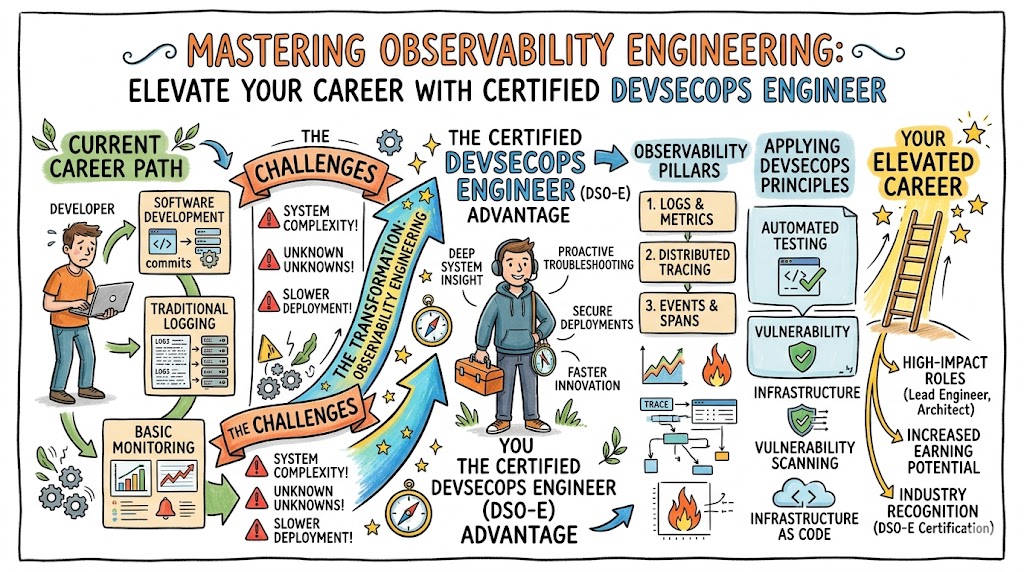
The modern software landscape demands a shift in how we approach security and operations. This Certified DevSecOps Engineer guide is designed for professionals who want to bridge the gap between development, security, and operations. Whether you are a cloud architect or a platform engineer, this certification provides the framework needed to integrate security into automated pipelines. As organizations prioritize secure delivery, platforms like devopsschool and aiopsschool serve as essential resources for professionals looking to sharpen their technical edge and make informed decisions about their career trajectory.
What is the Certified DevSecOps Engineer?
The Certified DevSecOps Engineer represents a professional standard for implementing security within continuous integration and continuous deployment pipelines. It moves beyond theoretical knowledge to focus on the practical application of security tools and automated testing within production environments. This certification exists to validate the ability to secure infrastructure-as-code and manage vulnerabilities in real-time. It aligns perfectly with enterprise practices where speed and security must coexist to maintain stable software delivery.
Who Should Pursue Certified DevSecOps Engineer?
This certification is built for software engineers who are transitioning into security-focused roles or those already working in platform engineering. Site Reliability Engineers will find it particularly valuable for hardening production systems, while cloud professionals will gain the necessary expertise to manage secure environments. It is equally relevant for security analysts who need to understand how to apply their discipline within automated development workflows. Engineering managers can also leverage this knowledge to improve team standards and security posture across their departments.
Why Certified DevSecOps Engineer
The demand for professionals who understand the intersection of security and automation continues to grow as legacy systems migrate to the cloud. This certification offers a long-term return on investment by teaching methodologies that remain relevant regardless of the specific tools being used. Professionals who possess this certification demonstrate a commitment to enterprise security standards and production excellence. It provides a clear path for staying competitive in an industry where manual security reviews are no longer sufficient to meet modern release cycles.
Certified DevSecOps Engineer Certification Overview
The program is delivered via the official and hosted on devopsschool. It is designed to be practical, focusing on hands-on assessments rather than rote memorization of concepts. Certification levels are structured to reflect real-world seniority, ensuring that engineers are tested on their ability to handle complex scenarios. Ownership of this credential signals that an individual has met a rigorous standard for implementing automated security controls.
Certified DevSecOps Engineer Certification Tracks & Levels
The tracks are broken down into foundation, professional, and advanced tiers to accommodate different stages of career development. Foundation levels introduce the core principles of security automation and policy enforcement. Professional levels require a deeper understanding of threat modeling and incident response within the pipeline. Advanced levels focus on architectural design and the strategic implementation of secure global environments, ensuring a progression that matches evolving job responsibilities.
Complete Certified DevSecOps Engineer Certification Table
| Track | Level | Who it’s for | Prerequisites | Skills Covered | Recommended Order |
| Security | Foundation | Junior Engineers | Basic Linux | Basic Scripting | First |
| Security | Professional | DevSecOps Engineers | Security Basics | Pipeline Security | Second |
| Security | Advanced | Lead Engineers | Professional Cert | Architecture | Third |
Detailed Guide for Each Certified DevSecOps Engineer Certification
Certified DevSecOps Engineer – Foundation
What it is
This certification validates the fundamental ability to identify security vulnerabilities and implement basic automated checks. It focuses on the primary tools used to scan code and manage dependencies.
Who should take it
It is ideal for developers and system administrators who are just beginning their journey into security automation.
Skills you’ll gain
- Understanding security basics in CI/CD.
- Identifying common application vulnerabilities.
- Using basic scanning tools for static analysis.
Real-world projects you should be able to do
- Integrate automated security scanning into a simple CI pipeline.
- Document common vulnerabilities found in standard build processes.
Preparation plan
- 7-14 days: Focus on basic security concepts and reading documentation.
- 30 days: Practice with lab environments provided in the training.
- 60 days: Review practice tests and refine your understanding of core tools.
Common mistakes
Focusing too much on theory and not enough on hands-on tool practice is a frequent error. Candidates also often underestimate the importance of understanding the underlying operating system.
Best next certification after this
- Same-track option: Certified DevSecOps Engineer Professional.
- Cross-track option: Certified SRE Engineer.
- Leadership option: Certified Engineering Manager.
Choose Your Learning Path
DevOps Path
The DevOps path focuses on the automation of software delivery and infrastructure management. It emphasizes the collaboration between teams to ensure efficient and reliable production releases. Engineers on this path will learn to build resilient systems that support fast-paced development cycles. Mastering this path allows professionals to bridge the gap between coding and infrastructure deployment.
DevSecOps Path
The DevSecOps path integrates security testing and policy enforcement directly into the automated delivery process. It teaches professionals how to build secure-by-design infrastructure and automate vulnerability detection. This is essential for those who want to specialize in protecting complex cloud-native environments. It provides the skills necessary to turn security into a shared responsibility across the engineering team.
SRE Path
The SRE path is centered on reliability, performance, and operational excellence. It covers the techniques for monitoring, incident management, and automated recovery of production services. Professionals on this path ensure that systems can handle scale while maintaining high availability. This path is vital for engineers who want to specialize in the stability of large-scale software systems.
AIOps Path
The AIOps path teaches the use of artificial intelligence and machine learning to improve IT operations. It covers log analysis, anomaly detection, and predictive maintenance to reduce operational noise. This path is designed for engineers who want to automate root cause analysis and proactive system management. It represents the future of large-scale environment monitoring.
MLOps Path
The MLOps path focuses on the operationalization of machine learning models within a production pipeline. It covers model deployment, versioning, monitoring, and scaling. Professionals here learn to manage the unique lifecycle of data-driven applications. This is critical for engineers working in environments where model performance and accuracy are key to business outcomes.
DataOps Path
The DataOps path emphasizes the management, movement, and quality of data within complex engineering ecosystems. It teaches how to automate data pipelines and ensure that information is reliable and secure. This path is for professionals who want to bridge the gap between data engineering and operational workflows. It focuses on creating robust systems for large-scale data processing.
FinOps Path
The FinOps path deals with the financial management of cloud resources and operational spending. It teaches how to monitor costs, optimize resource allocation, and ensure budget accountability in the cloud. This path is for engineers and managers who want to bring financial discipline to cloud infrastructure. It helps organizations make better decisions about their operational investments.
Role → Recommended Certified DevSecOps Engineer Certifications
| Role | Recommended Certifications |
| DevOps Engineer | Certified DevSecOps Engineer Professional |
| SRE | Certified SRE Engineer |
| Platform Engineer | Certified DevSecOps Engineer Advanced |
| Cloud Engineer | Certified DevSecOps Engineer Professional |
| Security Engineer | Certified DevSecOps Engineer Advanced |
| Data Engineer | Certified DataOps Engineer |
| FinOps Practitioner | Certified FinOps Practitioner |
| Engineering Manager | Certified Engineering Manager |
Next Certifications to Take After Certified DevSecOps Engineer
Same Track Progression
Once the foundation is set, deepening your expertise in specific security tools and architectural patterns is the logical next step. This involves moving toward advanced certifications that focus on complex security policies. Achieving this allows you to handle enterprise-grade security challenges with confidence.
Cross-Track Expansion
Broadening your skills by exploring SRE or Cloud engineering certifications adds significant value to your profile. Understanding how security impacts system reliability or cloud resource costs makes you a more versatile engineer. This approach prepares you for roles that require a holistic view of the entire technical environment.
Leadership & Management Track
Transitioning to leadership requires moving beyond technical tasks to managing teams and strategy. Focus on certifications that cover project management, team coaching, and architectural decision-making. This progression is essential for engineers aiming to influence technical direction at a higher organizational level.
Training & Certification Support Providers for Certified DevSecOps Engineer
DevOpsSchool provides a comprehensive range of training programs designed to build deep technical expertise in modern infrastructure. They focus on practical, lab-based learning that prepares professionals for real-world scenarios.
Cotocus specializes in coaching and mentoring for engineering teams looking to adopt DevOps and cloud-native practices. They provide structured paths that help individuals navigate their certification goals efficiently.
Scmgalaxy offers focused training on source control, pipeline management, and release engineering. Their programs are highly regarded for their depth and relevance to current industry standards.
BestDevOps provides high-quality resources and structured learning paths for professionals seeking to master automation and cloud operations. Their curriculum is tailored for those who prioritize hands-on experience.
devsecopsschool is a dedicated platform for all security-focused certifications, offering specialized tracks that integrate security into every aspect of the software delivery lifecycle.
sreschool focuses exclusively on reliability engineering and operational stability, providing the necessary training to manage complex and highly available production environments.
aiopsschool teaches the application of artificial intelligence and machine learning to operational tasks, helping engineers stay ahead in the evolving field of automated IT management.
dataopsschool provides targeted training for data engineering and data management within modern, automated infrastructure environments.
finopsschool focuses on cloud financial management, offering the knowledge required to control costs and optimize infrastructure spending effectively.
Frequently Asked Questions (General)
- What is the difficulty level of these certifications?The difficulty is designed to be challenging but achievable for professionals with practical industry experience. They focus on solving real-world problems rather than simple theory.
- How much time is required to prepare?Preparation times vary based on your background, but most candidates spend between 30 and 60 days of consistent study. Structured lab practice is highly recommended.
- Are there specific prerequisites for the foundation level?Basic knowledge of Linux and standard software development workflows is usually sufficient for foundation-level certifications.
- What is the ROI of getting certified?Certification validates your skills to employers, often leading to better job opportunities and a stronger understanding of current industry standards.
- Should I follow a specific order in my certifications?Following the suggested learning paths helps build a strong foundation before moving on to more specialized and advanced topics.
- Are these certifications recognized globally?Yes, these certifications cover core methodologies used by engineering teams across global and local markets.
- Do I need a background in security to start?No, the foundation levels are designed to introduce security concepts to developers and operations engineers.
- How often is the course content updated?Content is reviewed regularly to align with evolving industry practices and the latest shifts in technology stacks.
- Is there hands-on lab work included?Yes, the certification programs are centered on practical lab environments to ensure you gain real-world proficiency.
- Can I manage these certifications alongside a full-time job?Yes, the self-paced nature of the programs is designed to fit into the schedule of working professionals.
- Who provides the official assessments?The assessments are provided by the respective training organizations to ensure they reflect the practical skills taught in the courses.
- What happens if I fail an assessment?Candidates are generally provided with feedback and the opportunity to review the material before attempting the assessment again.
FAQs on Certified DevSecOps Engineer
- What is the primary focus of the Certified DevSecOps Engineer?The focus is on automating security controls within the software delivery pipeline to ensure robust production outcomes.
- Is this certification only for security professionals?No, it is intended for any engineer involved in the software delivery process who wants to implement security automation.
- Does this cover cloud-specific security?Yes, the training includes methodologies for securing cloud environments and managing cloud-native infrastructure.
- Can I use my existing tools in the labs?The labs focus on industry-standard tools that are highly transferable to any modern production environment.
- How does this certification help my career?It positions you as a skilled professional capable of handling the dual demands of velocity and security.
- Are there any hidden costs?All costs are transparently outlined by the providers on their respective training pages.
- How does this differ from standard security certifications?This certification is operational and practical, focusing on pipeline integration rather than just security theory.
- Is this relevant for teams using legacy systems?Yes, the principles of automation and security can be applied to improve legacy processes as they modernize.
Final Thoughts: Is Certified DevSecOps Engineer Worth It?
Choosing to pursue this certification is a commitment to your professional growth and technical capability. In an industry where the only constant is change, mastering the ability to secure automated workflows provides immense long-term value. It is not about collecting badges, but about gaining the deep practical knowledge needed to solve real production challenges. If you are looking to elevate your standing and contribute more effectively to your organization’s security posture, this path is an excellent choice. Take the time to practice, build, and apply these concepts in your daily work to see the true impact on your career.