
Introduction
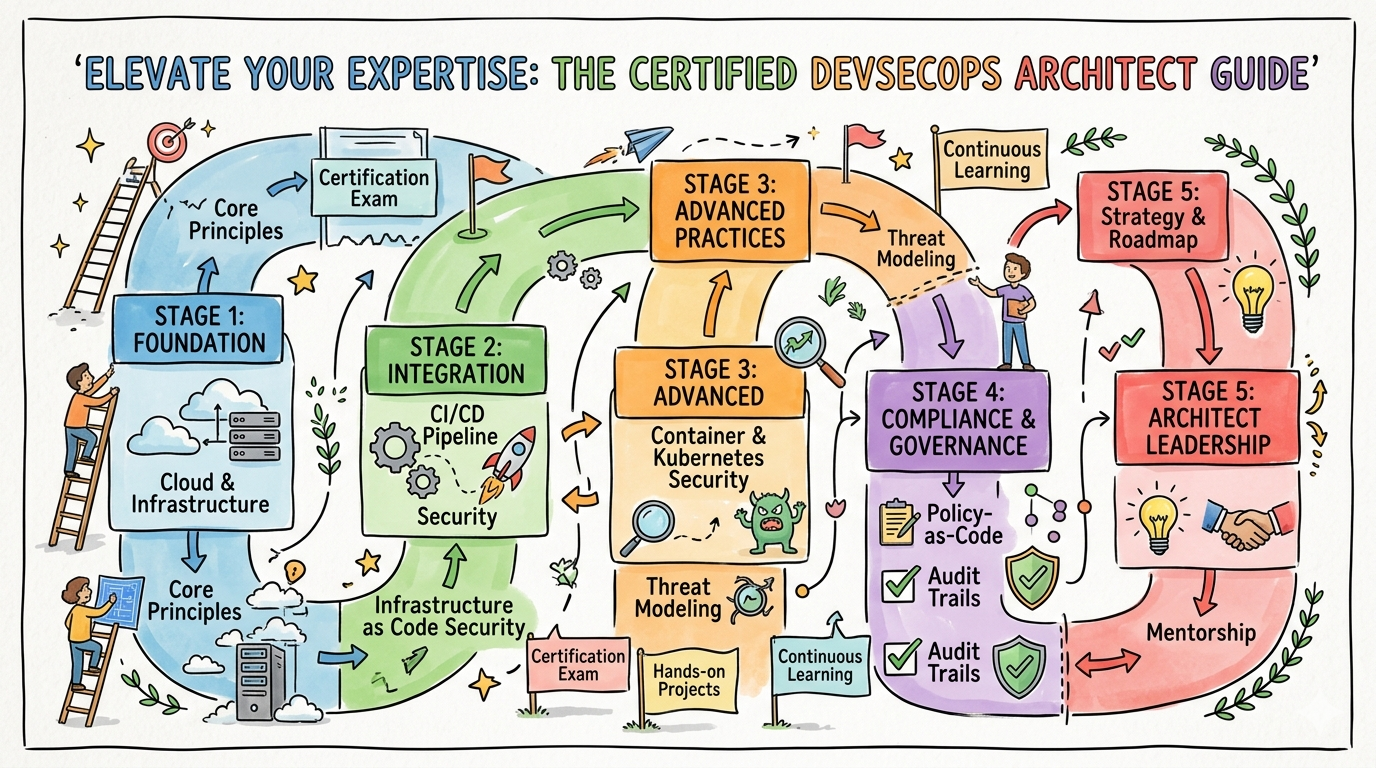
In the current landscape of rapid software delivery, the convergence of security and development has shifted from a best practice to an operational mandate. The Certified DevSecOps Architect represents a critical milestone for professionals aiming to bridge the gap between secure code and scalable infrastructure. This guide serves as a comprehensive resource for engineers, security practitioners, and platform leaders navigating the complexities of modern cloud-native environments. By exploring the core pillars of secure architecture, you will gain the clarity needed to make informed decisions about your professional development path, ensuring you remain at the forefront of industry standards, much like those explored through aiopsschool. Whether you are scaling an enterprise platform or securing a startup, this path offers a clear roadmap to mastery.
What is the Certified DevSecOps Architect?
The Certified DevSecOps Architect is a professional-grade credential designed to validate the ability to design, implement, and maintain secure-by-design systems. It moves beyond theoretical knowledge to focus on the practical application of security controls within complex, automated workflows. This certification exists to bridge the widening gap between high-velocity deployment models and the rigid compliance requirements of modern enterprises. It focuses on integrating automated security gates, threat modeling, and compliance-as-code into the very fabric of the software development lifecycle. By focusing on production-grade outcomes, the program ensures that practitioners can address real-world vulnerabilities while maintaining the agility that modern engineering teams demand.
Who Should Pursue Certified DevSecOps Architect?
This certification is designed for experienced technical professionals who are deeply involved in the design and maintenance of software delivery platforms. It is highly relevant for DevOps engineers, SREs, and cloud architects who find themselves increasingly responsible for securing the infrastructure they build. Security professionals and CISOs looking to understand the technical implementation of DevSecOps will also find immense value in this curriculum. Whether you are a lead engineer in India or a global platform architect, the program provides the technical rigor required to manage complex security mandates. It is also an excellent transition point for managers who need to lead secure digital transformation initiatives from a position of architectural authority.
Why Certified DevSecOps Architect
The demand for security-conscious architecture has surged as cyber threats become more sophisticated and regulatory requirements more stringent. This certification offers a long-term career advantage by focusing on foundational architectural principles that survive the rapid churn of individual tools and technologies. Professionals gain the ability to embed security into the automation pipeline, effectively transforming security from a bottleneck into an enabler of speed and reliability. Beyond technical skills, this certification demonstrates a commitment to professional growth and enterprise-level responsibility. It provides a tangible return on investment by positioning holders as high-value assets capable of mitigating risk and driving security-first cultural change.
Certified DevSecOps Architect Certification Overview
The Certified DevSecOps Architect program is delivered via and hosted on devopsschool. It is structured as a rigorous, professional-level assessment that evaluates a candidate’s capability to architect secure solutions in real-world scenarios. The certification process emphasizes hands-on competency, requiring an understanding of both traditional security principles and modern, cloud-native automated workflows. By successfully completing the assessment, candidates validate their expertise in designing resilient systems that meet global security standards. The structure is designed to reflect the realities of modern engineering, ensuring that certification equates to measurable, on-the-job performance.
Certified DevSecOps Architect Certification Tracks & Levels
The certification framework is segmented to support practitioners at various stages of their careers, from fundamental security awareness to advanced architectural leadership. Foundation levels establish the baseline knowledge of DevSecOps principles, while professional levels dive into the complexities of multi-cloud environments and automated compliance. Advanced tracks focus on specialized domains such as incident response, resilient architecture, and large-scale threat modeling. These tracks align with logical career progression paths, allowing engineers to specialize in the areas most relevant to their current roles while building the skills necessary to transition into architect-level responsibilities.
Complete Certified DevSecOps Architect Certification Table
| Track | Level | Who it’s for | Prerequisites | Skills Covered | Recommended Order |
| Security Strategy | Foundation | Entry-level Engineers | Basic DevOps knowledge | Threat modeling, secure SDLC | 1 |
| Architecture | Professional | Senior DevOps/SREs | Cloud/CI/CD experience | Secure pipelines, IaC hardening | 2 |
| Compliance | Advanced | Security Leads | Architectural experience | GRC, Compliance as Code | 3 |
Detailed Guide for Each Certified DevSecOps Architect Certification
Certified DevSecOps Architect – Professional Level
What it is
This certification validates an engineer’s proficiency in designing end-to-end secure software delivery pipelines that integrate automated security checks at every stage.
Who should take it
Senior DevOps engineers, cloud architects, and security professionals with at least three to five years of experience in managing production environments.
Skills you’ll gain
- Automated vulnerability scanning in CI/CD pipelines
- Implementation of policy-as-code for infrastructure
- Advanced container security and orchestration hardening
- Threat modeling for microservices and cloud-native applications
Real-world projects you should be able to do
- Design a secure CI/CD pipeline from commit to production with automated security gates.
- Implement a compliance-as-code framework that audits Kubernetes clusters in real-time.
- Build a threat-modeling exercise for a distributed microservices application.
Preparation plan
- 7–14 days: Review fundamental security principles and documentation of your cloud provider.
- 30 days: Focus on hands-on labs, specifically implementing security tooling within staging environments.
- 60 days: Conduct mock architecture reviews and complete end-to-end projects to solidify knowledge.
Common mistakes
- Focusing solely on theory without practical lab experimentation.
- Underestimating the importance of cultural change and stakeholder communication.
- Ignoring the maintenance aspects of automated security tools after initial deployment.
Best next certification after this
- Same-track option: Advanced Cloud Security Architect
- Cross-track option: Certified FinOps Practitioner
- Leadership option: Certified Engineering Management Professional
Choose Your Learning Path
DevOps Path
Focuses on the integration of security into existing CI/CD workflows and infrastructure automation. You will learn to treat security as a component of the delivery process rather than an external hurdle. This path prepares you to build secure, high-speed delivery platforms for growing engineering teams.
DevSecOps Path
Centers on the deep architecture of secure systems, emphasizing threat modeling and proactive vulnerability management. This path is essential for those who want to lead the security transition within their organizations. It builds the expertise needed to manage risk across complex, multi-cloud architectures.
SRE Path
Integrates security into the reliability and observability of production systems. You will learn how to build secure monitoring and alerting systems that trigger when compliance or security baselines are breached. This path is perfect for those who want to ensure systems are not just stable, but also resilient against attacks.
AIOps / MLOps Path
Focuses on the secure deployment and monitoring of AI models and data pipelines. You will learn how to handle sensitive datasets and secure the machine learning lifecycle against unique threats. This path is critical for organizations looking to scale their AI initiatives while adhering to strict security standards.
DataOps Path
Covers the architectural security required to manage data at scale. You will learn how to implement encryption, access control, and audit logging throughout the data lifecycle. This path ensures that data-driven organizations can maintain privacy and integrity without compromising the speed of data delivery.
FinOps Path
Emphasizes the intersection of cost management and security in the cloud. You will learn how to optimize cloud spend without creating security vulnerabilities or compliance risks. This path is ideal for those managing large-scale cloud footprints where cost and security must be balanced effectively.
Role → Recommended Certified DevSecOps Architect Certifications
| Role | Recommended Certifications |
| DevOps Engineer | Professional DevSecOps Architect |
| SRE | Security-Enhanced SRE Specialist |
| Platform Engineer | Infrastructure Security Architect |
| Cloud Engineer | Cloud-Native Security Specialist |
| Security Engineer | Enterprise DevSecOps Lead |
| Data Engineer | Secure DataOps Architect |
| FinOps Practitioner | Cloud Cost & Security Specialist |
| Engineering Manager | DevSecOps Strategy Leader |
Next Certifications to Take After Certified DevSecOps Architect
Same Track Progression
Once you have mastered the architectural fundamentals, move toward deep-dive certifications in specific vendor-neutral domains like advanced Kubernetes security or specialized threat hunting. This progression deepens your technical authority within the security niche.
Cross-Track Expansion
Broaden your expertise by exploring related fields such as FinOps or AIOps. Understanding how security interacts with cost and AI infrastructure will make you a more versatile architect capable of addressing holistic enterprise challenges.
Leadership & Management Track
Transition toward leadership-focused certifications that cover governance, team management, and the organizational strategy of DevSecOps. This path prepares you for roles such as Head of Platform Engineering or CISO.
Training & Certification Support Providers for Certified DevSecOps Architect
DevOpsSchool
With over 15 years of experience, this provider offers industry-recognized training that prioritizes practical lab work over theoretical lectures. Their curriculum is updated regularly to align with the latest tools and security frameworks, ensuring students gain job-ready skills.
Cotocus
Focuses on high-impact, scenario-based learning for enterprise professionals. They specialize in guiding engineers through complex architectural shifts, making them a preferred partner for organizations undergoing digital transformation and security hardening at scale.
Scmgalaxy
Provides deep technical training for professionals looking to master the specifics of CI/CD and secure pipelines. Their hands-on approach ensures that learners are comfortable implementing security controls directly into the developer workflow.
BestDevOps
Known for a comprehensive approach to DevOps culture and tooling. Their training programs are designed to bridge the gap between development and operations, ensuring that security is a collaborative effort rather than a siloed responsibility.
devsecopsschool
Dedicated entirely to the DevSecOps domain, this provider offers deep specialization in security architecture. They are the ideal choice for those who need to master specific security frameworks, threat modeling methodologies, and automated compliance solutions.
sreschool
Focuses on the reliability and observability aspects of cloud-native infrastructure. Their courses provide the necessary skills to integrate security into the incident response and system resilience phases of the software delivery lifecycle.
aiopsschool
Specializes in the intersection of AI, machine learning, and operational efficiency. Their training is essential for architects who need to manage the unique security and reliability challenges posed by modern AI-driven infrastructure.
dataopsschool
Offers expert guidance on the secure management of data pipelines and large-scale data architecture. They are highly recommended for professionals tasked with securing complex data environments while maintaining high-speed access for analytical tools.
finopsschool
Provides the intersectional knowledge needed to manage cloud costs while maintaining robust security and compliance standards. They are a must for architects who want to balance operational budget and risk effectively.
Frequently Asked Questions (General)
- What is the typical difficulty level of the Certified DevSecOps Architect program?
The program is designed to be challenging, focusing on practical problem-solving rather than rote memorization of concepts. It requires a solid foundation in both DevOps practices and security fundamentals to succeed. - How much time should I dedicate to preparation?
While this depends on your existing experience, most professionals require between 4 to 8 weeks of consistent study and hands-on lab work to feel fully prepared for the certification. - Are there any specific prerequisites required before starting?
Yes, a strong understanding of CI/CD pipelines, cloud infrastructure, and basic security concepts is essential to grasp the architectural nuances covered in this program. - What is the ROI of obtaining this certification?
The ROI is significant, as it validates specialized skills that are in high demand across global tech markets, often leading to career advancement and higher compensation potential. - Should I complete other certifications before this one?
It is highly recommended to have experience with standard DevOps or cloud certifications, such as those for AWS, Azure, or GCP, before attempting this architectural-level program. - How does this certification differ from other security credentials?
Unlike traditional security certifications that may focus heavily on policy and theory, this program is rooted in the technical implementation of security within automated delivery pipelines. - Is the exam practical or theoretical?
The exam is designed to test your ability to apply concepts in real-world scenarios, ensuring that you can solve actual architectural challenges faced in production environments. - Can I use my existing project experience for the certification?
While you don’t submit projects for the exam itself, your real-world experience will be the most valuable asset you bring to your preparation and exam performance. - How often should I renew my certification?
Certification renewal policies are designed to ensure your skills remain relevant in a rapidly changing field, with updates typically occurring periodically to reflect new standards. - What if I fail the exam on the first attempt?
Most certification programs allow for retakes, providing an opportunity to review the areas where you underperformed and strengthen your knowledge before trying again. - Will this certification help me switch roles within my company?
It is an excellent tool for demonstrating your readiness for more advanced, security-focused roles and can serve as a catalyst for internal promotions. - Are there practice exams available to help me prepare?
Yes, practice exams are often provided to help you gauge your readiness and become familiar with the format and style of the questions you will encounter.
FAQs on Certified DevSecOps Architect
- How does this certification address multi-cloud security?
The program teaches architecture patterns that are cloud-agnostic, ensuring your security designs are portable across different environments like AWS, GCP, and Azure. - Is this certification recognized globally?
Yes, it is designed to align with international security standards and frameworks, making it highly relevant for organizations across all global regions. - Does it cover compliance as code?
A significant portion of the curriculum is dedicated to automating regulatory compliance, ensuring that security policies are enforced as code throughout the deployment cycle. - Is it suitable for leaders and managers?
Absolutely, as it provides the technical literacy needed to manage security-focused teams and make high-level decisions about platform architecture and risk. - Does the program cover threat modeling?
Threat modeling is a core component, teaching you to identify and mitigate risks during the design phase, which is much more efficient than patching vulnerabilities in production. - Will I learn about container security?
Yes, it provides an in-depth look at securing containers, Kubernetes clusters, and the entire ecosystem of cloud-native deployment. - Is the certification exam proctored?
Yes, the exam is conducted under proctored conditions to ensure the integrity of the certification and the value of the credential in the professional market. - What is the best way to leverage this certification for career growth?
The best way is to showcase the practical projects you’ve implemented as part of your training and apply those architectural blueprints directly to your current workplace.
Final Thoughts: Is Certified DevSecOps Architect Worth It?
If you are serious about advancing your career in the cloud-native era, the Certified DevSecOps Architect is a highly practical investment. It bypasses marketing hype to focus on the technical realities of securing modern systems at scale. This program will not make you an expert overnight, but it will provide the architectural foundation and credibility needed to tackle complex security challenges. As you move forward, remember that the true value lies in the application of these principles in your daily work. If you are prepared to put in the effort to master these concepts, this path will undoubtedly elevate your professional standing and provide the clarity needed to lead in an increasingly security-conscious world.