
Introduction
In the modern competitive environment, the speed at which an organization delivers software is directly tied to its market relevance. Many enterprises find themselves trapped between the need for rapid feature deployment and the operational stability required by legacy systems. To navigate this transformation, many forward-thinking teams partner with a DevOps Consulting Company like Cotocus to build a foundation that balances agility with technical excellence. Engaging with experienced consultants helps align complex engineering workflows with long-term business goals, ensuring that infrastructure remains a catalyst for growth rather than a bottleneck.
The Strategic Importance of Consulting Partnerships
Internal teams often struggle with the “how” of modernization, even when the “why” is clear. Technical debt, siloed communication, and inconsistent deployment patterns are common barriers that hinder progress. Consulting partners provide the objective analysis necessary to break these cycles.
By introducing proven methodologies and industry-standard best practices, consultants act as a bridge between your current state and your desired future architecture. They do not just provide temporary fixes; they help build a sustainable framework that allows your internal staff to take ownership of the new processes.
Effective consulting is rooted in knowledge transfer. The ultimate success of any engagement is measured by the organization’s ability to maintain and scale its infrastructure independently after the consultants have completed their primary objectives.
Pillars of a High-Performance DevOps Consulting Company
A partner worth investing in does not merely push tools; they focus on the underlying architecture and the team culture. They prioritize building observability, automating repetitive tasks, and ensuring that security is a shared responsibility across the entire development lifecycle.
A strong consulting firm emphasizes sustainable engineering over quick, high-risk workarounds. They understand that every business has unique requirements, which is why they tailor their approach to fit your specific technology stack and team structure, rather than applying a generic, one-size-fits-all solution.
Furthermore, they possess deep experience in managing the cultural shift that accompanies DevOps adoption. By guiding your team through the transition, they help foster an environment where developers and operations professionals collaborate seamlessly to deliver value.
Comprehensive DevOps Consulting Services
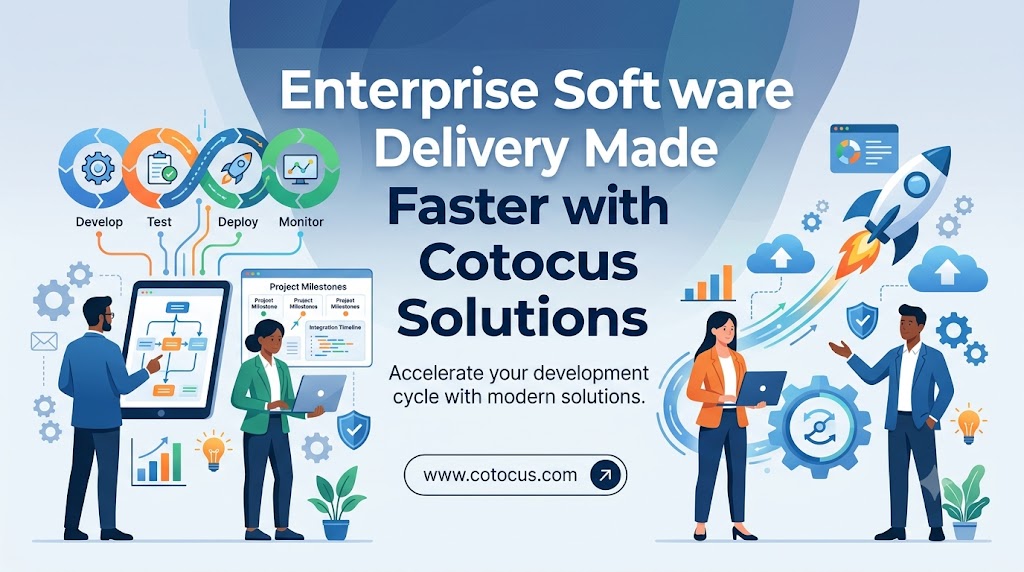
DevOps is not a single tool—it is a comprehensive philosophy that spans development, testing, and operations. The goal of DevOps Consulting Services is to streamline these phases into a cohesive pipeline that produces reliable, high-quality releases with minimal manual intervention.
Consultants begin by assessing your current maturity levels and identifying bottlenecks. From there, they design automated CI/CD pipelines that enforce quality gates, automated testing, and standardized deployment strategies.
This proactive approach significantly reduces the time-to-market for new features while simultaneously decreasing the likelihood of production outages. By standardizing these processes, teams can focus their energy on innovation rather than troubleshooting broken deployments.
Modernizing Infrastructure with Cloud Consulting Services
Transitioning to the cloud is a critical step in digital transformation, but doing so effectively requires more than moving data. Cloud Consulting Services focus on optimizing your architecture for scale, performance, and cost-efficiency.
Whether your strategy involves a hybrid model or a full public cloud migration, consultants help you implement best practices for resource management. This includes leveraging Infrastructure as Code (IaC) to ensure that your cloud footprint is reproducible and easy to manage.
A well-executed migration also prioritizes cost management and security, ensuring that you only pay for what you use and that your data remains protected according to industry standards.
Architecting Scalability with Kubernetes Consulting Services
As applications become more complex, managing them becomes exponentially harder without the right orchestration. Kubernetes Consulting Services provide the expertise required to build, manage, and scale containerized environments efficiently.
Consultants guide teams in cluster configuration, networking, and persistent storage management. They also help implement advanced deployment patterns, such as rolling updates and self-healing mechanisms, which are essential for maintaining high availability.
Beyond the technical setup, consultants ensure that your Kubernetes environment is properly monitored and secured, allowing your team to deploy applications across any environment with confidence.
Enhancing Reliability through SRE Consulting Services
Site Reliability Engineering (SRE) bridges the gap between development velocity and system stability. SRE Consulting Services help organizations define and achieve service levels that meet customer expectations.
By implementing robust monitoring, alerting, and incident management frameworks, consultants help reduce the “toil” that prevents engineers from focusing on meaningful work. This fosters a culture of reliability where teams proactively identify and fix issues before they impact the end user.
The result is a system that can recover from failures rapidly and scale effectively under heavy load, providing a stable foundation for the business.
Securing the Pipeline with DevSecOps Consulting Services
Security must be an integral part of the development process, not a final hurdle. DevSecOps Consulting Services help organizations implement “security as code” by embedding automated testing and compliance checks directly into the development pipeline.
Consultants work with your team to automate vulnerability scanning and policy enforcement. This allows you to catch security flaws early in the cycle, which is far more cost-effective than patching them in production.
This shift-left approach encourages a culture of shared security accountability, where every team member is empowered to contribute to the overall security posture of the software.
Advancing Operations with GitOps and Platform Engineering
The future of efficient software delivery lies in automation and self-service. GitOps Consulting Services guide teams in using Git as the source of truth for everything, ensuring that infrastructure state is always tracked and reproducible.
Platform Engineering Consulting focuses on creating internal platforms that abstract complex infrastructure, allowing developers to deploy code without needing to be experts in the underlying cloud or container layers.
By building these self-service capabilities, you reduce the cognitive load on developers and allow your platform teams to focus on improving the foundational infrastructure that powers your entire enterprise.
Intelligence-Driven Operations: AIOps, MLOps, and DataOps
As data becomes a primary driver for decision-making, the complexity of managing data pipelines and models grows. AIOps Consulting Services use machine learning to automate incident detection and streamline IT operations.
MLOps Consulting Services focus on the machine learning lifecycle, ensuring that models are trained, tested, and deployed reliably. Simultaneously, DataOps Consulting Services ensure that the data flowing into your models is clean, secure, and available.
Integrating these practices ensures that your data science efforts are not just experimental, but are core components of your production engineering strategy.
Empowering Teams through Corporate Training
The success of your infrastructure depends entirely on the people managing it. DevOps Corporate Training and Kubernetes Corporate Training are essential to ensure that your staff is equipped to handle modern engineering challenges.
Rather than generic certifications, expert-led training focuses on the specific tools and architectural patterns used within your organization. This hands-on guidance ensures that your team can confidently navigate and improve the systems they work on every day.
Investing in your team’s knowledge is the most effective way to ensure the long-term success of your digital transformation initiatives.
Selecting the Right Consulting Partner
When choosing a consulting partner, prioritize firms that emphasize transparency, knowledge transfer, and a track record of practical implementation. The best partners work alongside your team, treating the engagement as a collaborative effort rather than a one-off project.
Ask potential partners about their methodology and how they ensure that their solutions are sustainable. You want a firm that builds systems your team can manage, rather than one that leaves you dependent on their services for every minor change.
Strategic Guidance for Engineering Leaders
Engineering managers play a critical role in the success of any consulting engagement. Your focus should be on ensuring that the team understands the value of the new methodologies and is given the time to adopt them properly.
Demand that consultants provide documentation and mentorship alongside their deliverables. When your team is involved in the design process, they are much more likely to support the changes and maintain the resulting infrastructure effectively.
Frequently Asked Questions
- What defines a successful DevOps transition? Success is measured by improved deployment frequency, reduced change failure rates, and a measurable increase in team autonomy and overall system stability.
- How do you approach legacy system modernization? We conduct a thorough audit to decide if the application is better suited for refactoring into microservices or if it can be containerized effectively as is.
- Why is knowledge transfer critical in consulting? It prevents vendor lock-in and ensures that your internal team has the skills necessary to operate and iterate on the systems after the engagement ends.
- Can your training be customized for our tech stack? Yes, all training modules are tailored to your existing tools, cloud environment, and current organizational challenges.
- How do SRE practices reduce system downtime? By defining clear Service Level Objectives (SLOs) and automating incident response, SRE practices help teams identify and resolve issues before they escalate.
- What is the role of GitOps in infrastructure management? GitOps automates the synchronization between your Git repository and your infrastructure, ensuring a reliable, auditable, and repeatable deployment state.
- How do you integrate security without slowing down development? We automate security scans within the CI/CD pipeline, allowing developers to receive instant feedback on vulnerabilities during the build process.
- What distinguishes MLOps from standard DevOps? MLOps adds the management of data versioning, model training pipelines, and continuous monitoring of model performance in real-world scenarios.
- How do you handle multi-cloud strategies? We use infrastructure-as-code tools that are cloud-agnostic, allowing for consistent deployment processes across various providers.
- What is the best way to start an engagement? Begin with an initial technical audit to establish a baseline and identify the most high-impact areas for optimization.
Final Thoughts
The path to operational maturity requires consistent effort and a commitment to modern engineering principles. By leveraging expert consulting and prioritizing team growth, you can transform your technical operations into a competitive asset. Whether focusing on cloud migration, security automation, or platform engineering, the right approach will ensure your infrastructure remains resilient, scalable, and fully aligned with your business needs.