
Introduction
Finding and booking services used to involve a lot of phone calls, waiting on hold, checking local directories, or visiting businesses in person to find an open time slot. Today, things work much differently. People can open an app or a website on their phone, check available times, compare options, and book an appointment in just a few clicks. This shift has created a massive boom in online service marketplaces and booking portals. Digital service booking platforms are growing fast because they solve everyday inconveniences for both customers and service providers. Whether someone is looking for a local home repair technician, a freelance consultant, a wellness expert, or a professional service provider, online booking has become the preferred way to connect.
Understanding Digital Service Booking Platforms
To understand why these platforms are growing so quickly, it helps to look at what they actually are and how they work. A digital service booking platform is an online website or mobile application that connects people who need services with the professionals who provide them. Instead of calling a business during working hours to check availability, users can view real-time schedules, read service details, select a convenient time, and secure an appointment instantly.
Who Uses These Platforms?
- Customers: Everyday people looking for quick, reliable, and convenient ways to book services.
- Service Providers: Freelancers, independent contractors, small business owners, local salons, consultants, and service agencies looking to manage appointments and reach more clients.
What Types of Services Can Be Booked Online?
Almost any service that requires scheduling can be managed through a digital booking platform. Common examples include:
- Professional consulting and coaching
- Home maintenance and repair services
- Health, wellness, and beauty appointments
- Educational tutoring and training sessions
- Creative and digital freelance services
Both customers and service providers use the same underlying platform infrastructure, but they see different dashboards tailored to their specific needs. Customers see search filters, availability calendars, and booking forms. Providers see appointment schedules, client management tools, and service listing settings.
Why Digital Service Booking Platforms Are Growing Fast
The rapid expansion of online booking platforms is not driven by a single trend. Instead, it is the result of several changes in technology, consumer habits, and business needs.
1. Widespread Smartphone Usage
Smartphones have put the entire internet—and local service directories—right in people’s pockets. Because mobile devices are always accessible, users no longer need to wait until they are sitting at a computer to search for a service or book an appointment. They can do it while commuting, during a work break, or from home at night.
2. The Demand for Immediate Convenience
Modern consumers value their time. Waiting on the phone for a receptionist to check a calendar feels slow and outdated. People want instant answers and immediate confirmations. Digital booking tools provide a frictionless experience where appointments can be secured 24 hours a day, 7 days a week, without needing to speak to anyone directly.
3. The Rise of Independent Professionals and Small Businesses
The modern workforce includes millions of freelancers, independent contractors, and boutique agencies. These solo operators and small teams often do not have a dedicated receptionist or front desk staff. Digital booking platforms act as virtual assistants, handling appointment scheduling automatically while the provider focuses on doing their actual work.
4. Better Online Visibility for Local Businesses
In the past, finding local service providers relied heavily on word of mouth, physical flyers, or yellow pages. Today, digital platforms give small and independent businesses a professional online storefront. This makes it much easier for nearby customers to discover services they might not have found otherwise.
5. Simpler Digital Payments
Booking and paying used to require separate steps, such as mailing checks, carrying cash, or reading credit card numbers over the phone. Modern booking platforms often integrate secure digital payment options, allowing customers to pay deposits or complete transactions smoothly at the time of booking.
How Online Booking Makes Life Easier for Customers
For everyday users, transitioning to online booking removes many of the traditional frustrations associated with scheduling appointments.
- Easy Service Search: Users can filter providers by location, service type, price, and availability rather than browsing through endless search engine results.
- Quick Booking: Securing an appointment takes only a few clicks, eliminating the back-and-forth communication required by phone or email.
- Flexible Time Choices: Customers can view a provider’s complete calendar and pick a slot that genuinely fits their personal schedule.
- Clear Service Information: Detailed descriptions, pricing guides, and customer reviews help buyers make informed decisions before committing.
- Automated Booking Reminders: Text messages and email notifications help customers remember upcoming appointments, reducing missed schedules.
- Easy Communication: Integrated messaging tools allow clients to ask questions or clarify details without making phone calls.
How Digital Booking Helps Service Providers
Service providers face constant pressure to balance client work with administrative tasks. Online booking tools offer several operational advantages.
- Better Online Visibility: Listing services on an active platform helps professionals attract new clients who are actively looking to hire.
- Easier Appointment Management: Automated calendars prevent double-booking and keep track of daily schedules without manual paperwork.
- Reduced Administrative Work: Letting customers book online frees up hours previously spent answering phone calls and coordinating meeting times.
- Better Time Planning: Clear schedules allow providers to plan their workdays efficiently and minimize downtime between jobs.
- Professional Business Image: Offering a clean, modern digital booking page gives independent professionals and small businesses a polished, trustworthy appearance.
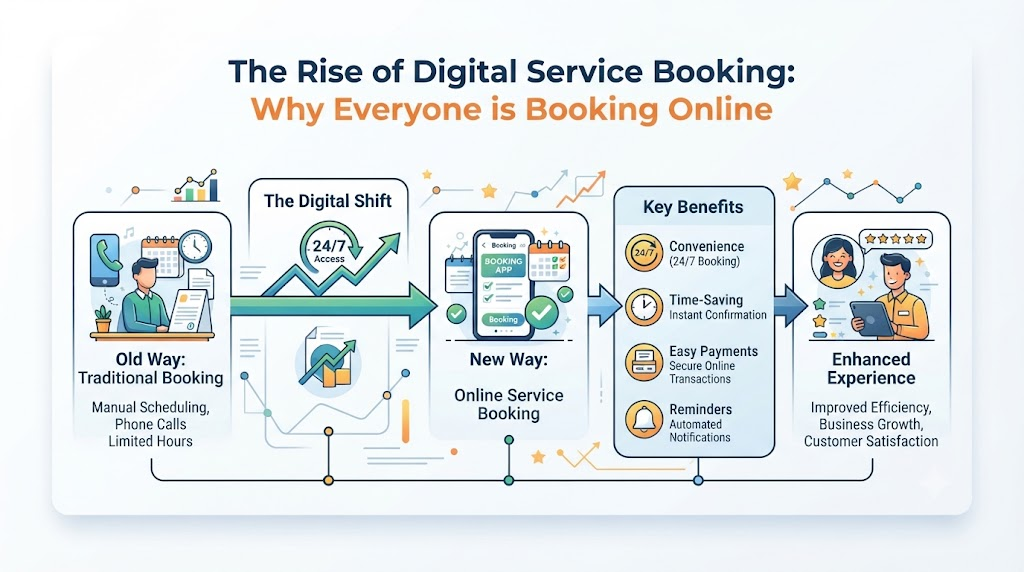
The Shift From Traditional Booking to Online Booking
To fully appreciate the growth of digital platforms, it helps to compare traditional scheduling methods with modern online workflows.
| Feature | Traditional Booking Methods | Digital Service Booking Platforms |
| Availability | Limited to business working hours | Available 24/7 from anywhere |
| Scheduling Speed | Requires phone calls, voicemails, or emails | Instant selection via real-time calendars |
| Information Access | Relies on brochures, word of mouth, or verbal details | Clear online profiles, pricing, and reviews |
| Record Keeping | Paper appointment books or manual notebooks | Centralized digital history and client records |
| Reminders | Often forgotten or require manual reminder calls | Automated email and text notifications |
| Payment Handling | Cash, checks, or manual card processing | Integrated digital payments and secure checkouts |
Traditional methods like phone calls and walk-ins are still used by certain customers, but the convenience of digital alternatives has changed expectations across almost every industry.
How Digital Service Booking Platforms Work
The process of finding and booking a service online is designed to be straightforward for both parties.
- Service Search: A customer visits a platform and searches for a specific type of service or professional in their desired location.
- Provider Evaluation: The user reviews available profiles, reads service descriptions, checks pricing, and looks at past customer feedback.
- Option Selection: The customer chooses a specific service package or appointment type that matches their needs.
- Time Selection: The user opens the provider’s interactive calendar and selects an available date and time slot.
- Booking Confirmation: The customer enters their contact details and confirms the booking.
- Provider Notification: The service provider receives an instant notification of the new booking and sees it added to their digital schedule.
- Reminders and Updates: Both parties receive automated reminders as the appointment time approaches.
Why Customers Prefer Online Service Booking
Customers continue to move toward digital platforms because the experience puts control in their hands. When someone needs a service urgently, waiting until a business opens to make a phone call is frustrating. Online booking allows a user to research options at midnight, compare three different providers side by side, and lock in an appointment immediately.
Furthermore, having access to transparent information—such as upfront pricing and verified customer reviews—helps reduce the uncertainty that often comes with hiring a new service provider.
Why Service Providers Are Moving Online
Service providers adopt booking platforms not just for convenience, but for business survival and growth. Consumer habits have changed, and people expect to be able to book services online the same way they order food or book travel.
Professionals who rely solely on phone calls risk losing potential clients to competitors who offer a faster, digital-first experience. By utilizing online booking tools, businesses can capture leads at any hour of the day, even when they are busy working with other clients or sleeping.
The Role of Mobile Phones in Online Service Booking
Smartphones are the primary engine driving the adoption of digital booking platforms. A few years ago, online booking still required a desktop computer or laptop. Today, responsive websites and dedicated mobile apps make the entire workflow mobile-friendly.
- On-the-Go Searching: Users can look up services while walking down the street or waiting for public transit.
- Instant Notifications: Push notifications and SMS alerts keep customers and providers instantly updated on booking changes.
- Mobile Payments: Integrated mobile wallets and digital payment gateways allow users to complete transactions with a single tap.
The Role of Online Payments in Service Booking
Secure payment integration has become a major component of modern service platforms. While some services are booked with payment settled in person after completion, many platforms support upfront payments or deposits.
- Faster Confirmation: Paying or leaving a deposit during booking secures the appointment firmly for both sides.
- Digital Records: Both customers and providers have clear digital receipts of financial transactions.
- Reduced No-Shows: When financial commitment or deposits are involved, customers are significantly more likely to show up for their scheduled appointments.
What Customers Should Check Before Booking a Service
Even with the convenience of digital platforms, customers should take a few practical steps before confirming any appointment:
- Service Details: Make sure the specific service offered matches what you actually need.
- Provider Information: Look for verified credentials, professional backgrounds, and business details.
- Transparent Pricing: Check if there are hidden fees or additional costs for extra work.
- Customer Reviews: Read feedback from previous clients to gauge service quality and reliability.
- Cancellation Rules: Review the provider’s policy on rescheduling or canceling appointments in case plans change.
- Customer Support: Ensure there is a clear way to contact the provider or platform if questions arise.
What Service Providers Should Look for in a Booking Platform
Professionals choosing a digital platform to manage their business should evaluate several key features:
- Easy Booking Interface: The booking process must be simple so customers do not abandon the form halfway through.
- Calendar Management: Tools should sync easily with personal or business calendars to prevent scheduling conflicts.
- Customer Communication: Built-in messaging or automated notifications help maintain clear contact with clients.
- Simple Dashboard: A clean, easy-to-read control panel makes managing daily appointments stress-free.
- Reliable Support: Access to responsive customer support ensures technical issues can be resolved quickly.
Benefits of Digital Service Booking Platforms
When implemented effectively, digital booking platforms offer notable advantages:
- Higher Convenience: Removes scheduling friction for users.
- Time Savings: Eliminates manual phone coordination.
- Wider Discovery: Connects local providers with a broader audience.
- Better Organization: Keeps appointment records accurate and centralized.
- Improved Communication: Keeps both parties informed of updates or changes.
Challenges of Digital Service Booking Platforms
Despite their growth, online booking platforms also face certain challenges that users and providers should keep in mind:
- Privacy and Data Security: Users must share personal and contact details, making data protection essential.
- Technical Glitches: Internet outages or software bugs can occasionally disrupt booking schedules.
- Cancellations and No-Shows: Last-minute cancellations can disrupt a provider’s daily revenue.
- Managing Expectations: Miscommunications about service scope can happen if descriptions are unclear.
Both platforms and users can minimize these issues by choosing reputable services, reading terms carefully, and maintaining clear communication.
How Technology is Changing Service Booking
Technology continues to refine how appointments are handled. Moving beyond basic static web pages, modern booking portals utilize automated reminders, real-time calendar syncing, and cloud-based data storage. These technological upgrades make scheduling feel effortless, ensuring that appointments are confirmed accurately and communicated clearly to everyone involved.
The Role of Trust in Online Service Booking
Trust is the foundation of any digital transaction. When customers book a service online, they are inviting a professional into their home, hiring them for important work, or trusting them with their time and money.
Platforms build this trust through transparency. Clear pricing, verified reviews, detailed provider profiles, and secure communication channels help customers feel confident before they click the final booking button.
How Professnow Fits Into the Digital Service Booking Space
Platforms like Professnow.com play a supporting role in the broader digital service ecosystem by helping connect people with local professionals and service providers. By offering a structured space where users can discover services and providers can present their offerings clearly, platforms simplify the connection process.
The goal of such platforms is not to overcomplicate the search, but to bridge the gap between everyday customer needs and professional service availability in a clean, accessible manner.
Frequently Asked Questions
What is a digital service booking platform?
A digital service booking platform is an online website or app that allows customers to search for services, view provider availability, and schedule appointments instantly without needing to make phone calls.
Why are digital service booking platforms growing fast?
They are growing because smartphones make online access easy, customers demand immediate convenience, and independent professionals need efficient tools to manage their schedules.
How does online service booking work?
Users search for a service, review provider profiles and schedules, choose a convenient date and time, and confirm their booking through a simple online interface.
How do digital booking platforms help customers?
They save time by allowing 24/7 booking, provide transparent pricing and reviews, offer flexible scheduling, and send automated appointment reminders.
How do booking platforms help service providers?
They provide online visibility, automate appointment scheduling, reduce manual phone coordination, and help professionals organize their workdays more efficiently.
What should customers check before booking a service online?
Customers should review service details, provider credentials, pricing, customer feedback, cancellation rules, and payment options.
Why are mobile phones important for online service booking?
Smartphones allow users to search for services, check calendars, receive notifications, and complete bookings from anywhere at any time.
Can small businesses use digital service booking platforms?
Yes, small businesses, independent contractors, and solo freelancers use these platforms to manage clients and streamline their booking workflows.
What features should a service booking platform have?
A good platform should offer a simple booking interface, real-time calendar management, clear service listings, automated reminders, and a clean user dashboard.
How can Professnow help with online service discovery?
Professnow helps connect users with local service providers by offering an organized directory and clear information that simplifies the search for professional services.
Conclusion
The rapid growth of digital service booking platforms reflects a permanent shift in how people expect to find and schedule services. Customers want speed, convenience, and transparency, while service providers need efficient tools to manage their time and reach clients without unnecessary administrative overhead. By replacing slow traditional methods with streamlined digital workflows, these platforms make service discovery simpler for everyone involved. Exploring reliable directories like Professnow.com can help you discover local professionals and manage your service needs with ease.