
Introduction
Finding the right person for a job used to rely heavily on word-of-mouth recommendations, local flyers, newspaper advertisements, or driving around town to find a shop. While personal referrals still hold value, modern technology has changed how people discover service providers. Today, online platforms bring together hundreds of local experts—from electricians and plumbers to tutors, accountants, and photographers—into a single digital space. However, seeing a list of profiles on a screen does not automatically mean every listed provider is reliable, skilled, or the right fit for a specific project. Convenience is not the same as reliability. When money, time, and home security are involved, users need to know how to evaluate a digital marketplace before relying on it. Understanding what makes an online service platform dependable helps consumers make safer and more confident choices.
What Is a Professional Service Platform?
A professional service platform is a digital marketplace that connects individuals who need specific work done with independent experts who provide those services. Instead of searching across multiple unrelated websites, users can visit a single site or app to search for local talent. The typical user journey involves entering a specific service and a target location, browsing through local profiles, comparing credentials and pricing, and submitting a booking request for a preferred date and time. For example, on platforms like ProfessNow, users can discover professionals by service and location, review detailed background information, and initiate contact through structured booking tools.
Why Trust Is Different From Convenience
An attractive website design, smooth navigation, and a large number of listed profiles can make a platform feel convenient to use. But convenience only means the software is easy to navigate. Trust is deeper. It relates to how much reliable, verifiable information the platform provides so that users can make an informed decision. A trustworthy platform avoids hiding important details behind complex interfaces or flashy marketing. It prioritizes clarity over volume. Instead of focusing solely on how many workers are listed, a dependable marketplace focuses on giving consumers the necessary tools to judge competence, fairness, and safety.
Clear and Complete Professional Profiles
The foundation of any reliable service marketplace is the professional profile. When browsing online, users should look for depth rather than just a catchy headline. A helpful profile goes beyond a name and a phone number.
Essential profile elements include:
- Clear descriptions of the professional’s core skills and daily services.
- Years of experience or a summary of past work history.
- Explicit service areas or neighborhoods covered.
- Upfront pricing guidelines or rate structures.
- Current schedule availability.
While detailed profiles provide crucial context, readers must remember that a well-written profile does not automatically guarantee high-quality service. It simply gives consumers a starting point for evaluation.
Professional Verification and Trust Signals
Verification is one of the most frequently discussed topics in digital marketplaces. On many sites, users see badges, checkmarks, or labels next to certain names. Understanding what these symbols actually mean is vital for managing expectations. Platform verification typically involves checking a provider’s identity, verifying contact details, or reviewing professional credentials where applicable. However, verification is not a universal guarantee of service quality or flawless performance. Furthermore, platform-level verification is distinct from independent government licensing or specialized trade certifications. A verification badge confirms that a profile meets the platform’s baseline standards; it does not replace the need to ask specific questions about a project.
Transparent Pricing Information
Financial clarity reduces friction and builds confidence between customers and service providers. A dependable marketplace encourages providers to be upfront about how they charge, whether through hourly rates, fixed project fees, or consultations. Prices often vary based on several factors, including geographical location, job complexity, required materials, urgency, and the provider’s level of experience. Consumers should understand that a listed rate on a profile may serve as an estimate rather than a final quote. Transparent platforms make it clear when a price is subject to change after an on-site inspection or a detailed discussion of the job requirements.
Ratings and Customer Reviews
Feedback from previous clients serves as one of the most visible indicators of past performance. Reviews offer practical insights into a professional’s punctuality, communication style, cleanliness, and overall workmanship. However, looking only at a star rating can be misleading. Smart consumers read the actual written text of multiple reviews. They look for specific details about the type of work performed, the timeliness of the provider, and how any unexpected issues were handled. On platforms like ProfessNow, completed bookings lead to authentic ratings and reviews displayed directly on professional profiles, giving future customers a window into past service experiences.
Why Recent Reviews Matter
An old review written three years ago may not reflect how a professional operates today. Service quality can fluctuate as team members change, businesses relocate, or market conditions shift. When evaluating feedback, readers should pay close attention to recent reviews from the past few months. A pattern of consistent, positive feedback over a recent period is generally more reassuring than a cluster of glowing reviews from years ago followed by a long silence.
Balanced Reviews Can Be More Useful
Many people assume that a five-star rating with zero negative comments is the only acceptable option. In reality, a balanced review section often provides a more realistic picture. A mixture of mostly positive reviews with a few minor, constructive critiques can indicate genuine customer experiences. Furthermore, how a professional responds to constructive feedback reveals a great deal about their customer service ethics. A thoughtful, polite reply to a difficult review shows professionalism, whereas defensive or dismissive behavior is worth noting.
Location-Based Discovery
Proximity matters significantly when hiring local service providers. Travel distance affects response times, punctuality, and whether a professional is willing to travel to a specific neighborhood. A highly skilled technician with fantastic reviews may still be a poor fit if they do not regularly serve the user’s specific town or region. Platforms that organize discovery around clear geographical boundaries—such as country, city, and service category—help users narrow their options to local experts who can actually reach their location in a reasonable timeframe.
Availability and Booking Transparency
Knowing that a professional serves an area is only half the battle; they also need to be available when the work is required. Reliable platforms provide clear visibility into schedules or response times so users do not waste time messaging busy providers. A transparent booking process reduces confusion from the start. When users can select a profession, specify their city, compare profiles, and submit a booking request with a preferred date and time, the entire arrangement feels structured and organized. Clear communication channels keep both parties aligned on what happens after the request is sent.
Easy Comparison Between Professionals
Trust is rarely built in isolation; it often comes from comparison. When users evaluate multiple profiles side by side, they can better understand standard market rates, typical experience levels, and common service offerings. Comparing options based on actual job requirements prevents impulsive hiring. For example, a homeowner needing minor wiring work may not need a master industrial electrician who charges premium corporate rates. Comparing skills, location, pricing, and availability helps match the right professional to the exact scope of the job.
Clear Information About Services
Vague descriptions make it difficult for consumers to know what is included in a quoted price. A trustworthy profile clearly outlines service limitations alongside core offerings. Users should look for explicit details regarding what materials are supplied, whether cleanup is included, and if warranties or guarantees apply to the workmanship. Clear scope definitions prevent misunderstandings after the work begins.
A Simple and Clear Booking Process
The transition from browsing profiles to requesting a service should feel straightforward. A reliable platform guides users through logical steps: selecting a service category, entering location details, choosing a preferred date, and detailing specific project requirements. Knowing what happens after hitting the submit button is equally important. Users should expect clear confirmation messages, details on how the professional will respond, and a record of the booking details for future reference.
Good Communication Between Users and Professionals
Even the best digital platform cannot replace direct human communication. Clear conversations before starting a job ensure that both the customer and the professional are on the same page. Discussing expectations, specific service requirements, arrival windows, and potential price adjustments for unexpected complications helps build working trust. Good platforms facilitate this communication without placing unnecessary hurdles in the way.
Privacy and Responsible Handling of User Information
Using an online marketplace requires sharing personal details such as phone numbers, home addresses, and specific service needs. Users have every right to expect that their information is handled responsibly. While specific privacy practices vary by platform, trustworthy sites maintain clear, accessible privacy policies explaining how data is collected, stored, and shared. Consumers should always review these policies to understand how their contact information is protected before submitting sensitive booking details.
Platform Transparency
A dependable marketplace is transparent about its own operations. It should be easy for users to understand how professionals are ranked, how reviews are collected, and how booking requests are processed. When a platform hides its operational mechanics or makes vague claims about its internal standards, it creates uncertainty. Clear explanations regarding platform rules and user responsibilities foster a healthier ecosystem for everyone involved.
Customer Support and Problem Resolution
Inevitably, questions arise or plans change. Whether a booking needs rescheduling, an address needs updating, or a communication breakdown occurs, having access to responsive customer support matters. While online platforms connect independent parties rather than directly employing every worker, trustworthy marketplaces offer clear support channels to help users navigate technical issues, cancellations, or platform-related questions.
Trust Is Built Through Multiple Signals
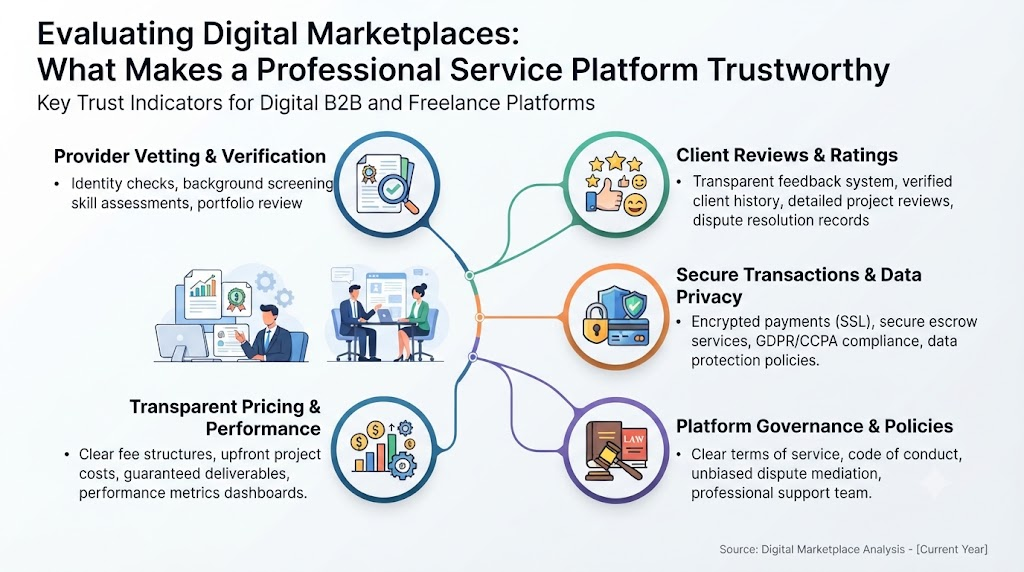
True reliability never rests on a single feature. A flashy badge, a glowing five-star review, or a low price tag should never be viewed in isolation. Confidence develops when multiple signals align. When a professional profile features realistic experience, clear skills, transparent pricing, consistent reviews from recent customers, and local availability that matches the user’s timeline, the overall picture becomes trustworthy. This multi-faceted comparison approach forms the core of effective professional discovery on platforms like ProfessNow.
Red Flags Users Should Notice
Knowing what to look for includes recognizing warning signs that suggest caution is necessary. Common red flags on professional platforms include:
- Highly incomplete profiles with missing contact info or blank service descriptions.
- Vague or contradictory pricing claims that change drastically without explanation.
- Suspicious review patterns, such as dozens of generic, five-star reviews posted on the exact same day.
- Pressure from a provider to bypass the platform’s booking or payment channels immediately.
- Information that cannot be verified or checked against professional standards.
A red flag does not automatically mean a professional is dishonest; rather, it is a signal to look more closely, ask more questions, or consider another provider.
Trust Signals vs. Guarantees
Managing expectations prevents disappointment when hiring online. It is helpful to distinguish clearly between a helpful trust signal and an absolute guarantee:
- A verified badge confirms identity or profile checks, but it is not a guarantee of flawless service quality.
- A high rating reflects past customer satisfaction, but it does not guarantee a perfect future experience.
- A low price is not proof of poor quality, just as a high price is not proof of elite craftsmanship.
- A large number of reviews indicates experience, but it does not automatically mean a provider is the right match for a unique job.
Understanding these distinctions helps users approach online marketplaces with a balanced, realistic perspective.
How Users Can Evaluate a Professional Service Platform
Evaluating an online marketplace requires a systematic, step-by-step approach. Consumers can follow this simple workflow to stay safe and make smart hiring decisions:
- Examine the Platform: Check if the site is easy to navigate, provides clear category breakdowns, and offers transparent information about how its booking and review systems work.
- Search Locally: Enter your specific service and city to filter for providers who operate within your geographic area.
- Compare Profiles: Review experience, documented skills, upfront pricing, and current availability across multiple candidates.
- Read Customer Feedback: Look past star ratings to read written reviews, paying attention to recent comments and detailed project descriptions.
- Initiate Contact Securely: Use the platform’s structured booking request tools to establish clear communication regarding dates, times, and job specifications.
Professional Platform Trust Checklist
| Trust Factor | What to Check | Why It Matters |
| Professional Profiles | Completeness of skills, experience, and service descriptions | Provides necessary context about who you are hiring. |
| Verification Signals | Identity checks or platform verification badges | Establishes a baseline of accountability. |
| Pricing Transparency | Hourly, fixed, or estimated rate structures | Prevents unexpected financial surprises. |
| Customer Reviews | Written feedback and recent rating patterns | Offers realistic insights into past customer experiences. |
| Location & Availability | Service areas and calendar responsiveness | Confirms the professional can actually reach you on time. |
| Booking Process | Clear steps for requests, dates, and confirmations | Keeps all arrangements organized and transparent. |
How ProfessNow Supports Professional Discovery
Finding trusted help does not have to be an overwhelming guessing game. Platforms designed with transparency in mind aim to simplify the search process by putting essential information right at the user’s fingertips. For instance, ProfessNow allows users to explore local experts by searching across specific professions and cities. Consumers can examine detailed professional profiles, compare information such as experience, skills, pricing, ratings, and availability side by side, and send direct booking requests with preferred dates and times. By combining intuitive local discovery with transparent comparison tools, platforms like ProfessNow help everyday consumers connect with reliable professionals more confidently.
Frequently Asked Questions
What makes a professional service platform trustworthy?
A trustworthy platform provides transparent information, clear professional profiles, verified user reviews, fair pricing visibility, and a straightforward booking process without hiding key details behind confusing interfaces.
Does a verification badge mean a service provider is guaranteed to do a great job?
No. Verification badges typically confirm identity checks or baseline platform requirements, but they do not guarantee service quality or flawless project execution.
Why should I read written reviews instead of just looking at star ratings?
Star ratings only give a quick summary, whereas written reviews provide specific details about punctuality, communication, cleanliness, and the exact type of work performed.
Are old reviews useful when choosing a professional?
Old reviews offer historical context, but they may not reflect recent changes in pricing, service quality, staff, or professional circumstances. Recent reviews are generally more relevant.
How does location affect my choice of a professional?
Proximity influences travel time, response speed, and scheduling availability. A highly rated professional who does not serve your specific city or neighborhood will not be able to complete your job.
Is a listed price on a professional profile always the final cost?
Not always. Listed prices often serve as estimates or starting rates. Final costs may vary depending on the complexity of the project, required materials, and specific site conditions.
What should I do if a professional’s profile lacks essential details?
Incomplete profiles make comparison difficult. You can reach out through the platform to ask clarifying questions or look for another provider with more transparent information.
How do booking requests work on modern service platforms?
Users typically select a service category and location, review available professional profiles, choose a preferred date and time, and submit a booking request to initiate contact.
Can I trust a professional who has a mix of positive and negative reviews?
Yes. A balanced mix of reviews often provides a realistic picture. How a professional responds to constructive feedback can tell you a lot about their customer service ethics.
Why is platform transparency important for consumers?
Platform transparency ensures you understand how professionals are listed, how reviews are collected, and what to expect during the discovery and booking process, reducing uncertainty.
Conclusion
Choosing the right expert for your home, business, or personal project requires more than clicking the first profile that appears on a screen. True confidence comes from evaluating multiple trust signals together, including detailed professional profiles, verified experience, transparent pricing, recent customer reviews, local availability, and structured booking processes. By taking the time to compare your options carefully, you can separate marketing hype from genuine reliability. Whether you need a quick home repair or specialized consulting, platforms that prioritize clarity and user empowerment make it easier to find trusted professionals and get your work done with peace of mind. Explore local experts today on ProfessNow and take the first step toward your next successful project.