
Introduction
Navigating urological health concerns requires clear information, reliable guidance, and access to qualified medical professionals. Whether an individual is experiencing persistent urinary symptoms, researching a specific diagnosis, or exploring available treatment pathways, understanding how urological care works is essential. UrologyHospitals.com serves as a dedicated healthcare information resource designed to help patients connect with appropriate urology hospitals, understand treatment approaches, and identify qualified urology specialists. This guide explores the foundational aspects of urological care, diagnostic procedures, common conditions, advanced surgical options, and practical considerations for choosing healthcare providers.
Understanding Urological Healthcare and Medical Scope
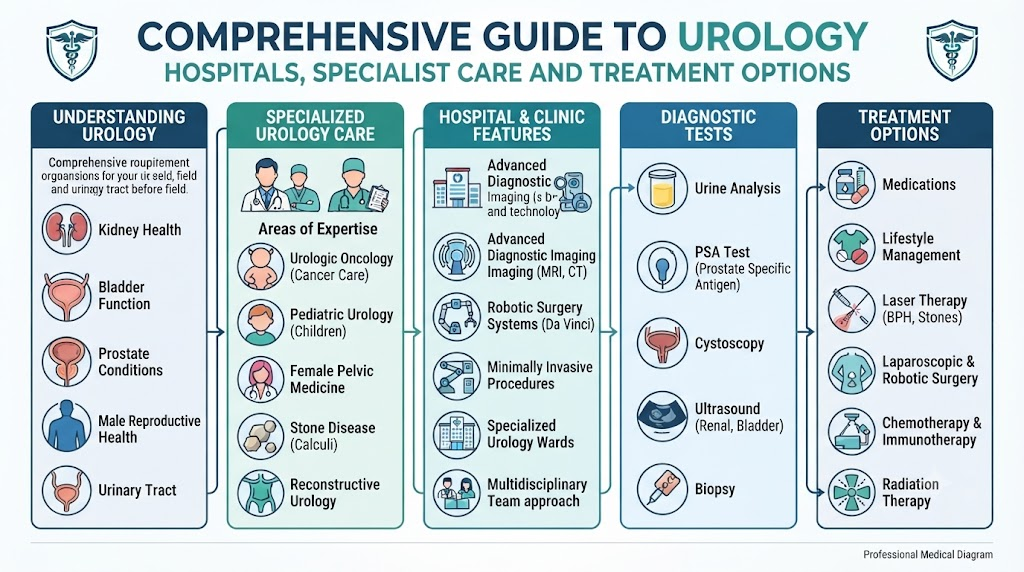
Urology is a specialized branch of medicine focused on the urinary tract in both men and women, as well as the male reproductive system. The organs under the care of urologists include the kidneys, ureters, bladder, urethra, and male reproductive organs such as the prostate, testicles, and penis. Because these systems manage vital functions like waste filtration, fluid balance, and reproduction, any disruption can significantly affect overall well-being.
Patients often seek specialized care for conditions ranging from common infections to complex malignancies. Understanding the scope of urology hospitals and the role of clinical experts helps patients approach their healthcare journey with clarity. Medical evaluation typically begins with a thorough assessment by a primary care provider, followed by a referral to a specialist when targeted diagnostic testing or advanced management is required.
Common Symptoms and Warning Signs in Urological Health
Urological conditions manifest through various physical signs. Recognizing these indicators early can prompt timely medical evaluation. Common warning signs include:
- Persistent or sharp pain in the back, side, or lower abdomen
- Blood in the urine, known medically as hematuria
- Frequent or urgent need to urinate
- Difficulty starting urination or weak urine flow
- Burning sensation or discomfort during urination
- Passing cloudy or foul-smelling urine
- Pelvic pressure or discomfort
- Involuntary leakage of urine
While these symptoms signal that a medical evaluation is necessary, they do not confirm a specific diagnosis on their own. Many urological conditions share overlapping signs, making professional diagnosis essential.
Causes and Risk Factors Affecting Urinary and Reproductive Health
Urological issues stem from diverse origins, influenced by internal biological factors, genetics, and environmental elements. Understanding these factors provides context for prevention and early management. Common risk factors include:
- Advanced age, particularly regarding prostate and bladder health
- Family history of kidney stones, urological cancers, or congenital urinary anomalies
- Lifestyle habits such as inadequate hydration, smoking, and dietary patterns
- Chronic medical conditions like diabetes, hypertension, and obesity
- Anatomical factors or recurrent infections affecting the urinary tract
Distinguishing between modifiable lifestyle risks and non-modifiable genetic factors helps patients and physicians design appropriate monitoring strategies.
Diagnosis and Medical Evaluation Procedures
Accurate diagnosis forms the foundation of effective urology treatment. Specialists utilize a range of diagnostic tools to identify the root cause of symptoms. Standard diagnostic procedures include:
- Detailed medical history and physical examination
- Urinalysis and urine culture to detect infection or abnormalities
- Blood tests, including kidney function panels and prostate-specific antigen testing
- Imaging studies such as ultrasound, computed tomography scans, and magnetic resonance imaging
- Cystoscopy, allowing direct visualization of the bladder and urethra using a specialized scope
- Urodynamic testing to evaluate how well the bladder stores and releases urine
Each diagnostic test serves a specific clinical purpose, helping specialists determine the most appropriate care plan based on individual health profiles.
Urology Treatment Options and Therapeutic Approaches
Management strategies for urological conditions vary widely depending on the diagnosis, severity, and patient health status. Treatment approaches generally fall into several categories:
- Conservative management, including lifestyle modifications, dietary adjustments, and active surveillance
- Pharmacological therapy using targeted medications to manage symptoms or treat infections
- Minimally invasive procedures designed to resolve blockages or remove stones with minimal disruption
- Surgical interventions, ranging from standard open procedures to advanced robotic-assisted techniques
Individualized treatment planning ensures that patients receive care tailored precisely to their clinical needs.
Role of Urology Specialists in Diagnosis and Treatment
Urology specialists play a critical role in managing complex conditions of the urinary and reproductive tracts. Their expertise encompasses medical management, diagnostic interpretation, and intricate surgical procedures. Specialists work closely with patients to explain treatment risks and benefits, coordinate multidisciplinary care when treating cancers, and provide comprehensive follow-up to support long-term recovery.
Kidney Stone Treatment
Kidney stones form when minerals and salts crystallize in the kidneys, potentially causing severe pain and urinary obstruction. Effective kidney stone treatment depends on the size, location, and composition of the stone.
Small stones often pass naturally with increased fluid intake and pain management. When intervention is necessary, options include shock wave lithotripsy to break stones into smaller fragments using sound waves, ureteroscopy to remove or fragment stones using a small scope, and percutaneous nephrolithotomy for larger or more complex stones. Maintaining proper hydration and dietary modifications help reduce the recurrence risk.
Prostate Cancer Treatment
Prostate cancer is one of the most common malignancies affecting men. Treatment planning requires careful risk stratification based on cancer stage, grade, overall health, and personal preferences.
For localized, slow-growing tumors, active surveillance may be recommended to monitor the condition closely without immediate intervention. When treatment is necessary, options include surgical removal of the prostate, various forms of radiation therapy, and systemic treatments such as hormone therapy. Each approach carries specific considerations regarding efficacy and side effects.
Enlarged Prostate Treatment
Benign prostatic hyperplasia involves the non-cancerous enlargement of the prostate gland, which can obstruct urine flow and cause bothersome lower urinary tract symptoms. Enlarged prostate treatment ranges from watchful waiting and lifestyle changes to medications that relax prostate tissue or shrink the gland. When medical therapy is insufficient, minimally invasive procedures or surgical interventions such as transurethral resection of the prostate may be recommended to relieve obstruction.
Urinary Tract Infection Treatment
Urinary tract infections occur when bacteria enter the urinary tract, leading to inflammation and discomfort. Standard urinary tract infection treatment typically involves a course of prescription antibiotics chosen based on urine culture results. Patients experiencing recurrent infections undergo further evaluation to identify underlying anatomical or functional factors contributing to the condition. Prompt medical attention prevents infections from spreading to the upper urinary tract.
Bladder Cancer Treatment
Bladder cancer arises from the lining of the bladder and requires prompt specialized evaluation. Bladder cancer treatment depends heavily on whether the disease is non-muscle invasive or muscle-invasive. Initial management often involves transurethral resection of the bladder tumor, sometimes followed by intravesical therapy administered directly into the bladder. Advanced or invasive cases may require partial or radical cystectomy combined with systemic therapies.
Robotic Urology Surgery
Advancements in surgical technology have introduced robotic-assisted platforms to urological care. Robotic urology surgery allows specialists to perform complex procedures with high precision, three-dimensional visualization, and enhanced dexterity through small incisions. This technology is frequently applied in prostatectomies, partial nephrectomies, and reconstructive procedures. While robotic approaches offer benefits such as reduced blood loss and shorter recovery times, suitability depends on individual patient anatomy and surgeon expertise.
Choosing the Right Urology Hospital
Selecting an appropriate facility is a vital step in receiving quality care. Patients evaluating urology hospitals should consider several practical factors:
- Availability of dedicated urology departments and advanced diagnostic infrastructure
- Range of medical, minimally invasive, and surgical treatment capabilities
- Experience and credentials of the practicing urology specialists
- Multidisciplinary support for complex conditions such as urological cancers
- Infection control standards, patient safety records, and accreditation status
- Emergency support and comprehensive follow-up care infrastructure
| Treatment Option | Common Use | Potential Benefits | Important Considerations |
| Active Surveillance | Low-risk localized conditions | Avoids immediate treatment side effects | Requires regular, strict monitoring |
| Medication Therapy | Symptom management and infection control | Non-invasive, manageable daily routine | Requires adherence and monitoring for side effects |
| Minimally Invasive Procedures | Stone removal and tissue ablation | Shorter hospital stay, faster recovery | May not suit complex or large anomalies |
Finding a Urologist Near You
Locating an appropriate specialist involves assessing professional qualifications, hospital affiliations, and communication style. When searching for a urologist near me, patients should verify board certification, clinical experience relevant to their specific condition, and the availability of diagnostic equipment at the specialist’s affiliated clinic or hospital. Seeking a second opinion is often valuable when facing major surgical decisions.
| Factor | Why It Matters |
| Specialist Expertise | Ensures accurate diagnosis and tailored treatment for specific conditions. |
| Diagnostic Facilities | Enables prompt and precise evaluation without unnecessary delays. |
| Treatment Options | Provides access to both conservative and advanced surgical interventions. |
| Surgical Experience | Correlates with procedural precision and effective complication management. |
| Follow-up Care | Supports long-term recovery, monitoring, and ongoing health management. |
Questions to Ask a Urologist
Preparing thoughtful questions during a consultation empowers patients to make informed healthcare decisions. Useful questions include:
- What is the specific diagnosis causing my symptoms?
- What additional diagnostic tests are necessary?
- What are the available treatment options, including non-surgical approaches?
- What are the potential risks, benefits, and expected recovery timelines for each option?
- How will this treatment affect my daily life and long-term health?
- What follow-up care will be required after the procedure?
When to Seek Medical Attention
Certain urological symptoms require prompt or urgent medical evaluation. Patients should seek immediate care if they experience:
- Inability to urinate or complete urinary retention
- Severe, sudden flank or abdominal pain
- High fever accompanied by chills and urinary symptoms
- Significant, visible bleeding in the urine
- Rapidly worsening infection symptoms
Practical Tips for Preparing for a Urology Consultation
Adequate preparation helps maximize the value of a specialist visit. Patients should compile a complete medical history, list all current medications and supplements, bring previous diagnostic reports and imaging scans, and write down specific symptoms along with their timeline. Being organized facilitates clear communication with the healthcare provider.
Common Challenges in Urological Healthcare
Patients navigating urological conditions frequently encounter hurdles such as delayed diagnosis due to overlapping symptoms, confusion regarding complex medical terminology, anxiety surrounding surgical procedures, and challenges in comparing treatment alternatives. Addressing these obstacles through reliable education and open communication with specialists helps bridge the gap between diagnosis and effective management.
Best Practices for Patients
To support optimal health outcomes, patients should adhere to established healthcare best practices:
- Do not ignore persistent urinary symptoms or blood in the urine.
- Schedule professional evaluations promptly when symptoms continue or worsen.
- Keep all medical records, test reports, and medication lists organized.
- Follow prescribed treatment plans carefully and attend all follow-up appointments.
- Seek second opinions for major medical or surgical decisions.
Frequently Asked Questions
What conditions do urology hospitals treat?
Urology hospitals manage a comprehensive range of conditions affecting the urinary tract and male reproductive system, including kidney stones, urinary tract infections, enlarged prostates, and urological cancers.
When should I consult a urologist?
A primary care physician typically refers patients to a urologist when persistent symptoms like blood in urine, recurrent infections, elevated PSA levels, or structural abnormalities require specialized diagnostic evaluation.
Are all kidney stones treated with surgery?
No. Small kidney stones often pass naturally with increased hydration and medication, while larger or obstructive stones require medical procedures such as lithotripsy or ureteroscopy.
What is the difference between an enlarged prostate and prostate cancer?
An enlarged prostate is a non-cancerous growth common with aging, whereas prostate cancer involves malignant cellular changes. Both conditions present with similar urinary symptoms, requiring specialized diagnostic tests to distinguish between them.
How does robotic-assisted urology surgery work?
Robotic systems allow surgeons to control specialized instruments with high precision and 3D visualization through small incisions, assisting in complex urological procedures.
What should I bring to my first urology appointment?
Patients should bring a detailed symptom history, a list of current medications, previous medical records, and relevant imaging or lab test reports.
Can lifestyle changes help manage urological conditions?
Yes. Proper hydration, dietary adjustments, regular physical activity, and avoiding smoking support overall urinary tract health and can mitigate certain condition risks.
Why is follow-up care important after urology treatment?
Follow-up appointments allow specialists to monitor healing, assess treatment effectiveness, manage potential side effects, and detect any recurrence of conditions early.
Conclusion
Navigating urological health requires a balanced understanding of underlying conditions, diagnostic methods, treatment alternatives, and specialist care. By engaging with qualified professionals through established urology hospitals, patients can receive accurate evaluations and personalized management plans. While this guide provides educational insights into urological healthcare, individual health decisions must always be made in consultation with a qualified medical professional based on thorough personal assessment and clinical diagnosis.