
Introduction
Hiring the right expert can change your project. Many people rush this important choice. They focus on quick fixes rather than careful planning. This mistake often leads to wasted time and extra costs. Poor decisions can also cause stressful delays and disappointing results. Learning how to avoid these common hiring traps makes a big difference. You can protect your budget and get the quality you need. Let us explore the top mistakes people make when hiring professionals.
Why Hiring the Right Professional Matters
Finding a skilled expert saves you time. It protects your hard-earned money from bad investments. A good professional brings valuable knowledge to your project. They solve complex problems with ease and confidence.
When you rush the hiring process, you invite trouble. You might end up with someone who lacks proper skills. Quality work requires patience and smart choices. Taking your time pays off in the long run.
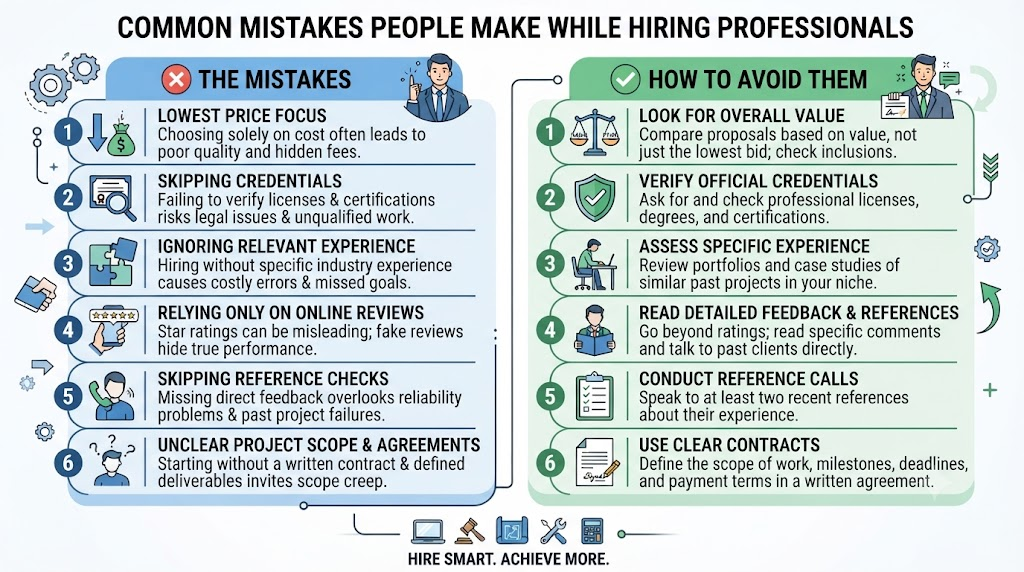
Mistake 1: Choosing Based Only on the Lowest Price
Selecting a service provider solely because they charge the least is a risky trap. Everyone wants to save money. Budgets are often tight.
Low prices often mean poor quality work. Hidden fees may pop up later. You might pay more to fix mistakes.
Look at overall value, not just the price tag. Compare multiple quotes. Check what is included in the service.
For example, you might hire a cheap contractor who uses weak materials. The roof leaks months later. You pay double for repairs.
Mistake 2: Failing to Check Qualifications
Skipping the verification of licenses, degrees, or certifications creates major legal risks. People trust nice words and professional websites. They assume everyone is certified.
Unqualified providers can break rules. Your project may fail safety inspections. You have no legal recourse if things go wrong.
Always ask for official credentials. Verify licenses with local boards. Confirm professional standing.
For example, hiring an uncertified electrician can spell disaster. Their faulty wiring causes a power surge. Your home appliances get damaged.
Mistake 3: Ignoring Relevant Experience
Hiring someone without specific experience in your project type leads to friction. General experience seems good enough to many buyers. People think skills transfer easily across different fields.
The professional struggles with specific details. They make costly trial-and-error mistakes. The final result misses your goal.
Ask for past project examples. Look for deep experience in your niche. Check portfolios carefully.
For instance, hiring a web designer who only builds blogs to create a complex e-commerce store creates problems. The site lacks secure checkout features.
Mistake 4: Relying Only on Online Reviews
Making a hiring choice based entirely on star ratings is misleading. Ratings are easy to see. They provide quick social proof.
Some reviews are fake or biased. A high rating does not guarantee a fit for your specific needs.
Read detailed written reviews. Look for patterns in feedback. Ask for direct client references.
For example, hiring a cleaner with five stars based on quick tasks for small apartments can fail. They might fail to clean a large office space properly.
Mistake 5: Skipping Reference Checks
Not speaking with past clients of the professional leaves blind spots. Calling references takes time. People feel awkward making phone calls.
You miss warning signs about reliability. You learn about poor communication too late.
Always request two past references. Ask specific questions about punctuality and quality. Listen for hesitation in answers.
For example, skipping references for a legal consultant can hurt. They might miss filing deadlines because they handle too many clients at once.
Mistake 6: Overlooking Communication Skills
Ignoring how a provider listens and replies during early talks causes trouble. Technical skills seem more important than talking. People accept slow replies.
Misunderstandings ruin project outcomes. You feel left in the dark about progress. Frustration builds on both sides.
Test their response time early. Notice if they listen actively. Ensure they explain complex ideas simply.
For example, hiring an accountant who never answers emails causes stress. Tax filing season arrives, and your documents sit untouched.
Mistake 7: Failing to Define the Project Scope
Starting work without a clear list of tasks and goals invites scope creep. Everyone wants to get started quickly. Details feel tedious to discuss.
Extra work leads to extra bills. Arguments break out over what was included.
Write down every project requirement. Agree on exact deliverables. Document boundaries clearly.
For example, hiring a graphic designer without a defined scope creates confusion. They design ten logos instead of one, and demand extra pay.
Mistake 8: Ignoring Contracts and Written Agreements
Relying on verbal promises and handshakes leaves you unprotected. Trust feels strong at the start. Paperwork feels formal or unnecessary.
You have no legal protection if disputes arise. Terms change without your consent. Deadlines slip without consequences.
Insist on a signed written agreement. Read every clause carefully. Clarify all terms before work begins.
For example, paying a consultant based on a phone call is risky. They might change the service fee halfway through the project.
Mistake 9: Misunderstanding Fees and Payment Terms
Not clarifying how and when payments are made causes cash flow surprises. Talking about money feels uncomfortable. People avoid reading fine print.
Sudden cash flow demands surprise you. Hidden charges inflate the final cost. Disputes stall project completion.
Agree on fixed rates or clear hourly caps. Set milestone-based payments. Avoid paying full amounts upfront.
For example, paying an entire fee upfront to a home repair expert can backfire. They might disappear halfway through the job.
Mistake 10: Not Checking Availability
Hiring someone without confirming their current workload results in delays. People want the best person regardless of time constraints.
Your project gets delayed. The professional rushes your work between other big jobs. Quality suffers badly.
Ask about current active projects. Confirm their weekly hours for your task. Set clear time commitments in writing.
For example, hiring a busy marketing specialist who takes two weeks to reply to every simple revision request slows down your campaign.
Mistake 11: Overlooking Privacy and Confidentiality
Sharing sensitive personal or business data without protection agreements is dangerous. People assume all professionals keep data safe by default.
Private data leaks out. Business secrets get exposed to competitors. Trust breaks down completely.
Sign a non-disclosure agreement when needed. Ask how data is stored. Limit access to essential files.
For example, sharing customer lists with an external consultant who stores them on an unsecured laptop invites security breaches.
Mistake 12: Failing to Discuss Deadlines and Expected Results
Assuming everyone shares the same timeline and vision causes disappointment. People focus only on starting the work. End goals feel obvious.
Work drags on indefinitely. Final outputs do not match your needs. You lose business opportunities.
Set firm milestone dates. Define measurable success criteria. Review progress at regular intervals.
For example, hiring a business advisor without setting a delivery date for the growth strategy report leaves you waiting for months with no result.
Common Hiring Mistakes Summary
| Hiring Mistake | Possible Consequences | Practical Ways to Avoid |
| Lowest Price Focus | Poor quality and hidden fees | Compare overall value and multiple quotes |
| Skipping Credentials | Failed inspections and no recourse | Verify licenses and official certificates |
| Ignoring Experience | Costly errors and missed goals | Review past portfolios and niche work |
| Relying Only on Ratings | Mismatched skills and fake reviews | Read detailed text and check references |
| Skipping References | Reliability issues and delays | Call past clients and ask direct questions |
| Ignoring Communication | Misunderstandings and frustration | Test response time and listening skills |
| Unclear Project Scope | Scope creep and extra bills | Document every requirement and deliverable |
| No Written Contract | Lack of legal protection | Insist on signed agreements |
| Vague Payment Terms | Cash flow stress and disputes | Set milestone payments and fixed rates |
| Ignoring Availability | Delayed projects and rushed work | Confirm active workload and weekly hours |
How to Compare Multiple Professionals Fairly
Comparing providers requires a structured approach. Look at relevant experience first. Check service scope and pricing details side by side.
Evaluate communication styles and responsiveness. Review past work samples and verified references. Confirm availability and contract terms.
A fair comparison keeps your emotions out of the choice. You make decisions based on clear facts.
Important Questions to Ask Before Hiring a Professional
Ask direct questions during your initial talks. Inquire about their relevant experience in your specific industry. Ask for proof of qualifications and active licenses.
Request an estimated total cost and breakdown of fees. Talk about expected timelines and key milestones. Ask what deliverables you will receive.
Clarify how many revisions are included in the price. Discuss payment terms and schedules. Ask how they prefer to communicate. Inquire about any possible extra charges.
Warning Signs to Notice Before Finalizing
Watch out for vague pricing and unclear answers. Be careful if a provider makes unrealistic promises. Pressure to pay quickly is a major red flag.
An unwillingness to explain terms shows poor ethics. Poor communication early on rarely improves later. Missing written agreements indicate unprofessional habits.
Spotting these signs saves you from bad partnerships. Walk away when something feels wrong.
A Practical Step-by-Step Hiring Process
Start by identifying your exact needs and goals. Set a realistic budget before looking at options. Shortlist several suitable service providers.
Verify important details like credentials and experience. Compare proposals using a structured checklist. Discuss expectations and clarify all doubts.
Confirm terms in writing through a signed contract. Review progress regularly as the work moves forward.
Discovering Professionals with Professnow.com
Finding the right expert takes time and effort. Platforms like Professnow.com help simplify your search. You can explore various service options in one place.
Professnow.com connects users with independent professionals across different categories. It provides a convenient way to discover local and specialized service providers. You can browse profiles to understand what different experts offer.
Use the platform to compare options and read available details. Always conduct your own checks before making a final commitment. Keep your research thorough and thoughtful.
Professional Evaluation Checklist
| Evaluation Step | What to Check | Action Item |
| Needs Assessment | Project goals and scope | Write down exact requirements |
| Budget Alignment | Cost estimates and limits | Set a clear financial ceiling |
| Credentials Check | Licenses and certifications | Verify with official authorities |
| Experience Review | Past projects and portfolio | Inspect relevant past work |
| Reference Verification | Client feedback and reliability | Call past clients directly |
| Availability Check | Current workload and timeline | Confirm weekly hours |
| Contract Terms | Payment schedule and deliverables | Sign a detailed written agreement |
Frequently Asked Questions
1. Why is checking professional qualifications important before hiring?
Checking qualifications ensures the provider has legal authorization and basic training. It protects you from substandard work and regulatory penalties.
2. How can I compare prices without choosing the cheapest option?
Compare the total value, scope of work, and included deliverables instead of just looking at the bottom line. Low bids often hide extra costs.
3. Why should I look at relevant experience instead of general skills?
Niche experience ensures the professional understands industry-specific challenges. They make fewer mistakes and deliver better results faster.
4. Can I trust online reviews completely when choosing a service provider?
Online reviews offer helpful insights but can be biased or fake. Always read detailed feedback and request direct client references.
5. What questions should I ask past client references?
Ask about punctuality, communication quality, adherence to budgets, and overall satisfaction with the final deliverables.
6. Why are written contracts necessary for small projects?
Written contracts set clear expectations and protect both parties legally if disputes arise over timelines or payment terms.
7. How can I identify hidden costs before signing an agreement?
Ask for an itemized cost breakdown that details labor, materials, taxes, and potential extra charges for revisions.
8. What should I do if a professional has poor availability?
If deadlines are critical, look for another provider who can dedicate sufficient weekly hours to your project.
9. What are the main warning signs of an unreliable service provider?
Vague pricing, pressure for upfront payment, lack of a written contract, and poor communication are major red flags.
10. How does Professnow.com help me discover professional services?
Professnow.com lets you explore various service options and browse independent professional profiles in one convenient platform.
Would you like me to adjust any specific section or add more details to the comparison checklist?
Final Thoughts
Hiring the right professional takes time and careful thought. Rushing the process often leads to costly mistakes and frustration. By doing your research, checking credentials, and communicating clearly, you protect your budget and project goals. Always rely on written agreements and fair comparisons to make smart choices. Taking these steps ensures a smooth partnership and successful results every single time.