
Introduction
Embarking on a journey toward an aviation career is an exciting venture, but it starts with one of the most critical decisions an aspiring aviator will make: selecting the right training institution. Flight training is a unique blend of rigorous academic knowledge and hands-on practical flying. Aspiring pilots must navigate complex regulatory requirements, financial commitments, and varying curriculum structures. Because career goals, personal learning styles, and timelines differ significantly from person to person, students should compare training institutions carefully. Understanding course structure, instructor experience, aircraft fleets, facilities, and regulatory requirements ensures that your chosen path sets a solid foundation for long-term success.
What Makes a Good Pilot School?
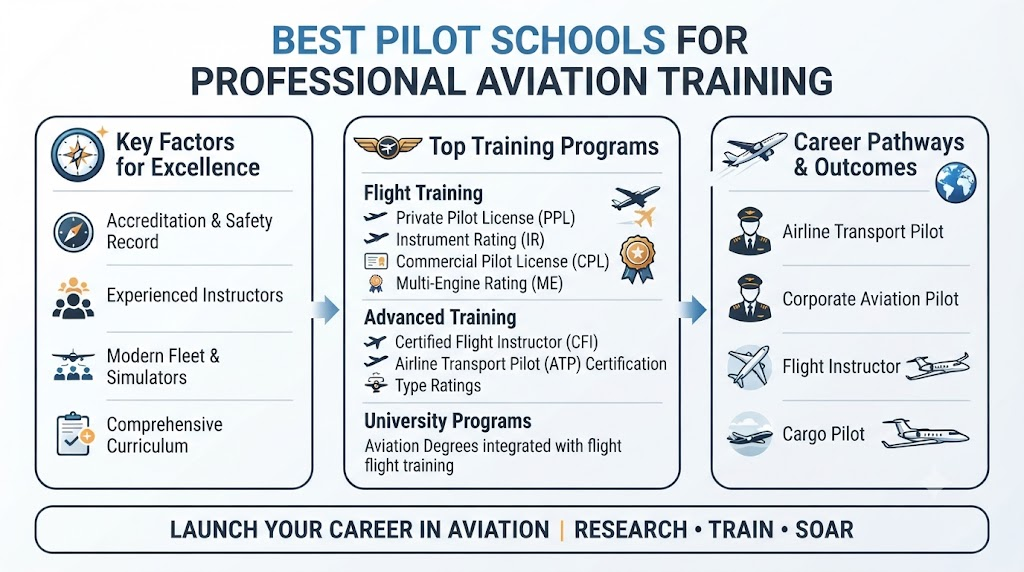
Evaluating a training facility requires looking beyond flashy advertisements or convenient locations. The best pilot schools prioritize safety, educational quality, and student development above all else. When researching institutions, students should examine the quality of qualified flight instructors, the condition and availability of training aircraft, and the presence of advanced flight simulators where available.
A comprehensive ground school program is essential for mastering aerodynamics, meteorology, and navigation. Furthermore, a strong institutional safety culture, high maintenance standards, clean training facilities, and reliable student support services play a massive role in shaping a confident pilot. Efficient flight scheduling and transparent training records help students track their progress systematically while maintaining compliance with relevant regulatory standards.
How to Find the Best Flight Schools
Finding the right environment requires careful research into what each program offers. Aspiring aviators should investigate the specific types of pilot licenses offered, the depth of the training curriculum, and the diversity of the aircraft fleet. Instructor-to-student ratios matter immensely, as does access to simulators that replicate complex flight scenarios.
External factors such as local weather patterns and airport traffic environments can significantly impact training continuity. Busy airspace can provide valuable real-world experience, while predictable weather can help prevent costly delays. Always verify current regulatory and licensing requirements with the appropriate aviation authority before enrolling in any program to ensure your invested hours and fees count toward official certification.
Choosing the Best Commercial Pilot Training Schools
Transitioning from a recreational flyer to a professional aviator requires specialized instruction. The best commercial pilot training schools offer structured curriculums that delve deep into advanced navigation, aviation meteorology, complex aircraft systems, human factors, radio communication, and flight planning.
Students should look for programs that seamlessly integrate simulator training, multi-engine aircraft instruction, and instrument flight rules training. Rigorous examination preparation is also crucial for passing both written assessments and practical checkrides. Prospective students must remember that training quality lays the groundwork for professional competence, though employment outcomes ultimately depend on individual performance, market conditions, and regulatory compliance.
What Makes the Best Pilot Schools in the World Different?
Globally recognized institutions often feature advanced training infrastructure, diverse international fleets, and rigorous instructor standards. However, the definition of the best pilot schools in the world varies depending on individual student needs.
Differences typically lie in the regulatory environment, airport facilities, simulator technology, and institutional safety systems. Rather than relying on popular global rankings, students should evaluate whether a school’s operating environment aligns with their personal budget, geographical preferences, and target licensing pathway. Training consistency and institutional heritage often matter far more than international prestige.
Understanding Commercial Pilot Training
At its core, commercial pilot training transforms a student from a basic private pilot into a qualified professional capable of exercising privileges for compensation or hire. This phase involves extensive ground instruction, precision instrument procedures, advanced navigation, and a thorough understanding of aviation regulations.
Students spend countless hours mastering aircraft operations, emergency procedures, and effective communication. Assessments and practical flight tests mark milestones along the way. Requirements vary depending on the specific aviation authority and licensing jurisdiction governing the training program.
What Is a Pilot Training Academy?
A pilot training academy is typically an institution designed to deliver immersive, structured, and career-oriented aviation education. Unlike smaller, casual flight clubs, an academy often operates on a more structured schedule, combining ground school, simulator sessions, and flight training into a unified curriculum.
Instructor-led learning, regular progress evaluations, and structured licensing preparation help keep students accountable. This immersive approach is particularly popular among international students and career changers looking for a predictable, step-by-step path toward professional aviation qualifications.
How to Evaluate the Best Flying Schools
When comparing different institutions, prospective students should look closely at operational logistics. Aircraft availability and maintenance schedules can make or break a training timeline; a school with too many students and too few planes will lead to frustrating delays.
Evaluate the instructor-to-student ratio to ensure personalized mentorship. Training environment safety procedures, simulator facilities, and local weather patterns all contribute to a smooth educational experience. Reviewing independent student feedback and understanding total transparent training costs will help prevent unexpected financial surprises halfway through the program.
Choosing an Airline Pilot Training Academy
Preparing for a career in commercial aviation involves adopting professional standards from day one. An airline pilot training academy focuses heavily on multi-engine training, advanced instrument procedures, crew resource management, and airline-oriented operational procedures.
Students learn professional communication, advanced situational awareness, and strict adherence to safety protocols. While these academies prepare candidates for the realities of the flight deck, they do not guarantee airline placement, interviews, or immediate employment, as hiring depends heavily on industry demand and individual qualifications.
How to Identify the Best Aviation Academy for Pilot Training
Selecting the best aviation academy for pilot training requires weighing regulatory approvals, instructor qualifications, and training infrastructure against personal career goals. A top-tier academy maintains transparent fee structures, clear training timelines, and robust student support services.
Because every student has unique learning needs and financial boundaries, the right academy is one that provides clear licensing pathways, well-maintained equipment, and a strong commitment to educational integrity under the supervision of applicable aviation authorities.
Understanding Commercial Pilot License Training
Before diving into commercial pilot license training, students must grasp the administrative and practical prerequisites. This phase requires meeting specific eligibility criteria, obtaining the appropriate aviation medical certification, and committing to extensive ground and flight training.
Students must pass rigorous written examinations and demonstrate exceptional aircraft control during practical flight tests. Proper documentation and strict adherence to licensing authority requirements are essential throughout this phase of the journey.
Important Factors to Consider Before Enrolling
Committing to flight training is a major life decision that demands careful logistical planning. Important considerations include:
- Total estimated cost, including hidden or ancillary expenses
- Aircraft availability and fleet maintenance standards
- Training location, climate, and local weather reliability
- Accommodation and transport options for relocating students
- Instructor availability and continuity
- Training duration and pacing options
- Examination support and testing fees
- Refund policies, contract terms, and financial flexibility
Understanding the complete financial and time commitment upfront protects students from unexpected hurdles down the road.
How to Prepare for Pilot Training
Understand the Licensing Pathway
Knowing which aviation authority and licensing framework you are training under is essential for mapping out your career, transferring qualifications, and ensuring your certification is recognized where you intend to fly.
Review Academic Requirements
Aviation theory covers complex subjects like physics, mathematics, and navigation. Reviewing these academic foundations early can make ground school significantly more manageable.
Understand Medical Requirements
Obtaining the correct class of aviation medical certificate should always be one of the first steps an aspiring pilot takes to ensure physical eligibility before investing financially.
Build Strong Aviation Fundamentals
Familiarize yourself with basic meteorological concepts, aerodynamic principles, and aviation regulations to give yourself a head start when formal training begins.
Develop Communication Skills
Clear, concise radio communication and active listening are vital safety skills in the cockpit. Practicing articulation and professional phrasing helps build early confidence.
Prepare Financially
Flight training requires careful budgeting. Account for tuition, aircraft rentals, fuel surcharges, landing fees, gear, examination costs, and living expenses to ensure a smooth training flow.
The Role of Flight Instructors in Pilot Training
The quality of your flight instructor can profoundly shape your capabilities as an aviator. An exceptional instructor offers more than just technical knowledge; they model safe decision-making, provide constructive feedback, and coach students through challenging maneuvers.
Effective instruction focuses on building disciplined habits, strong situational awareness, and sound judgment rather than simply rushing to check off flight hours. A great mentor ensures that safety remains the top priority in every flight.
Why Safety Culture Matters in Flight Training
A robust safety culture is the hallmark of any reputable training organization. It encompasses rigorous aircraft maintenance schedules, thorough pre-flight inspections, conservative weather decision-making, and open reporting of safety events.
When a flight school encourages students to speak up about safety concerns or operational risks without fear, it fosters an environment of continuous learning and hazard mitigation that protects aviators throughout their entire careers.
How BestPilotsSchool.com Can Help
Researching the myriad options available in aviation education can feel overwhelming. Platforms like BestPilotsSchool.com serve as useful research resources for individuals exploring pilot schools, flight schools, commercial pilot training, and aviation academies.
By gathering structured information in one place, aspiring aviators can easily compare different facets of pilot training, review educational requirements, and understand what to look for in a professional training provider. Whether you are investigating commercial pilot license training or looking into general aviation education, utilizing organized resources helps streamline your research process and ensures you make well-informed decisions tailored to your personal aviation goals.
Common Mistakes to Avoid When Choosing a Pilot School
- Choosing a school strictly based on the lowest upfront tuition fees
- Selecting an institution swayed entirely by promotional advertising
- Ignoring the school’s official regulatory approvals and standing
- Failing to check actual aircraft availability and fleet size
- Overlooking additional costs like landing fees, gear, and retakes
- Ignoring instructor qualifications and turnover rates
- Neglecting to investigate aircraft maintenance standards
- Committing to a licensing pathway without understanding regional limitations
- Assuming every flight school offers identical training quality
- Expecting guaranteed airline placement upon graduation
- Overlooking contract cancellation policies and refund terms
Technology in Modern Pilot Training
Modern aviation education integrates advanced technology to accelerate learning and enhance safety. Flight simulators allow students to practice emergency procedures, instrument approaches, and cross-country navigation in a controlled environment.
Digital learning platforms, electronic flight planning tools, and simulation software help bridge the gap between classroom theory and practical cockpit execution. While technology greatly enriches the learning experience, it serves as a powerful complement to, rather than a total replacement for, real-world flight hours.
Career Opportunities After Pilot Training
Earning a commercial license opens the door to diverse professional pathways within the aviation industry. Beyond traditional airline pilot roles, commercial aviators frequently pursue careers in cargo transport, charter operations, corporate aviation, flight instruction, and specialized aerial work.
Career progression depends heavily on accumulated flight hours, specialized ratings, economic conditions, and adherence to aviation regulations. Navigating this career path successfully requires patience, adaptability, and continuous professional development.
Future of Pilot Training and Aviation Education
Aviation training continues to evolve alongside advancements in simulation technology, data analytics, and aircraft design. Future training environments will likely feature more immersive virtual tools, competency-based learning modules, and a deeper focus on human factors and advanced safety management systems.
As technology changes, the core principles of discipline, rigorous preparation, and safety consciousness will remain the bedrock of competent pilot education.
Conclusion
Choosing a pilot school is a foundational step that requires careful, deliberate research. Aspiring aviators must weigh training quality, safety culture, aircraft availability, instructor expertise, curriculum depth, and total costs against their personal career aspirations.
Always verify current licensing, medical, and educational requirements directly with the appropriate aviation authority in your jurisdiction. By taking a thoughtful and structured approach to your research, you can select a training pathway that sets you up for a safe, fulfilling, and successful journey in aviation.