
Introduction
Embarking on the journey of family planning can bring up many questions, especially when navigating assisted reproductive technology. For individuals and couples exploring fertility care, understanding the various treatment paths, evaluating medical providers, and managing financial expectations can feel complex. Platforms like IVFHospitalsNow help demystify this process by providing structured, accessible information. Whether you are researching a specific procedure, evaluating treatment expenses, or looking to compare fertility clinics, having access to clear and reliable guidance is an essential first step toward making informed decisions.
What Is IVF Treatment?
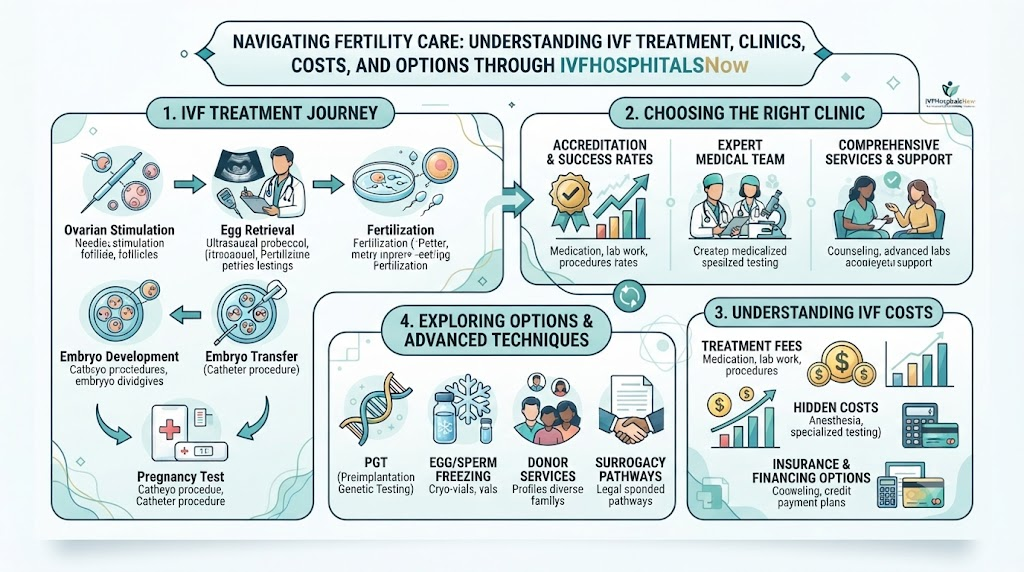
In-vitro fertilization (IVF) is a specialized form of assisted reproductive technology designed to help individuals or couples overcome various fertility challenges. At its core, the procedure involves uniting mature eggs and sperm outside the body within a specialized laboratory setting. The process typically begins with hormonal stimulation to encourage the ovaries to develop multiple mature eggs. Once retrieved, these eggs are combined with sperm to facilitate fertilization. The resulting embryos are then monitored for quality and development before a specialist transfers one or more into the uterus, with the goal of achieving a successful pregnancy. Because every patient’s medical background is unique, treatment protocols are rarely one-size-fits-all. A comprehensive consultation with a qualified medical professional is always necessary to determine if IVF or alternative reproductive methods align with your specific health needs.
Understanding the IVF Treatment Process
Initial Fertility Assessment
Before any treatment begins, reproductive specialists conduct a thorough medical evaluation. This diagnostic phase typically includes reviewing your medical and fertility history, performing hormonal blood tests, evaluating pelvic imaging, and analyzing sperm parameters. These diagnostic insights help physicians tailor a treatment plan suited to your individual circumstances.
Ovarian Stimulation
To maximize the chances of retrieving healthy eggs, patients undergo a controlled course of fertility medications. These hormone injections stimulate the ovaries to mature multiple follicles simultaneously rather than the single egg typically released during a natural menstrual cycle.
Egg Retrieval
Once the follicles reach an optimal size, a minor surgical procedure known as egg retrieval is performed under light sedation. Using ultrasound guidance, a specialist gently collects the follicular fluid containing the mature eggs from the ovaries.
Fertilization and Embryo Development
Following retrieval, the eggs are taken to the embryology laboratory where they are combined with prepared sperm. Specialists monitor the specimens over the next few days to observe fertilization success and evaluate how the resulting embryos develop.
Embryo Transfer
When the embryos reach the appropriate developmental stage, one is typically selected for transfer into the uterine cavity using a thin, flexible catheter. Any remaining high-quality embryos may be cryopreserved for future use.
Follow-Up and Pregnancy Testing
Roughly two weeks after the embryo transfer, a blood test is conducted to measure hormone levels and determine whether the procedure resulted in a successful pregnancy. Follow-up consultations help outline next steps regardless of the outcome.
IVF Treatment Cost and What It Includes
Navigating financial planning is a vital part of the fertility journey. Understanding the total IVF treatment cost requires looking closely at how individual components accumulate over the course of a cycle. Standard estimates often cover baseline clinical steps, but full financial transparency helps prevent unexpected expenses.
A complete financial breakdown typically involves:
- Initial physician consultations and diagnostic evaluations
- Fertility medications required for ovarian stimulation
- Clinical monitoring appointments, including ultrasounds and bloodwork
- The surgical egg retrieval procedure
- Laboratory services, including sperm preparation and fertilization
- Embryo culture, monitoring, and potential freezing storage
- The embryo transfer procedure
- Post-transfer follow-up care
Because treatment protocols vary based on individual medical responses, exact expenses differ from patient to patient and from clinic to clinic.
Factors That Can Affect IVF Treatment Cost
No two fertility journeys are identical, meaning financial estimates can shift due to several clinical and logistical variables. Factors that can influence your overall expenses include:
- Patient Age and Diagnosis: Specific underlying fertility factors may require customized protocols or specialized laboratory techniques.
- Medication Dosages: The quantity and type of hormonal medications needed during stimulation vary based on how an individual’s body responds.
- Number of Cycles: Some patients achieve success on their first attempt, while others may require multiple cycles.
- Additional Laboratory Procedures: Advanced techniques, such as genetic testing or specialized sperm selection, add to the baseline laboratory fees.
- Geographic Location and Clinic Fees: Clinic overhead, regional healthcare economics, and specialist expertise play significant roles in pricing structures.
- Storage and Ancillary Services: Long-term cryopreservation fees for frozen embryos, eggs, or sperm represent ongoing costs.
Reviewing detailed itemized estimates during your initial consultations ensures you have a clear picture of base treatment expenses versus supplementary care.
Understanding IVF Success Rates
When researching providers, patients frequently look at reported IVF success rates to gauge clinic performance. However, interpreting these figures requires careful context. Success rates can be influenced by a wide array of factors, including:
- Patient age at the time of treatment
- Specific underlying fertility diagnoses
- Egg and sperm quality
- Embryo grading and chromosomal screening results
- Individual clinic and laboratory expertise
- The cumulative number of treatment cycles completed
It is important to remember that statistical averages reflect historical group data rather than individual outcomes. When discussing success metrics with healthcare providers, ask how their data is calculated, whether it accounts for live births per cycle or per transfer, and how your specific prognostic factors align with their published outcomes.
How to Compare Fertility Clinics
Finding the right provider involves looking beyond promotional materials and conducting a structured evaluation of your options. When you compare fertility clinics, consider creating a checklist to review key operational and clinical pillars:
- Specialist Credentials: Assess the training, board certifications, and clinical experience of the reproductive endocrinologists.
- Laboratory Infrastructure: Inquire about the technology, air filtration systems, and qualifications of the embryology team, as laboratory standards directly impact embryo development.
- Treatment Availability: Verify whether the clinic offers the specific services or advanced technologies you may require.
- Success Reporting: Review how transparently the clinic shares and explains its success metrics.
- Patient Communication: Evaluate how responsive the care team is and whether you feel heard during consultations.
- Cost Transparency: Ensure the clinic provides comprehensive written estimates outlining all potential fees.
What to Look for When Choosing IVF Clinics
Selecting among various IVF clinics requires balancing logistical convenience with medical excellence. A supportive environment can significantly reduce the stress associated with fertility treatments. Look for practices that prioritize patient education, offer clear timelines, and maintain open lines of communication between patients, nurses, and physicians. Additionally, consider whether the clinic provides auxiliary support services, such as nutritional guidance or psychological counseling, which can be invaluable resources throughout your care journey.
IVF Abroad: Important Things to Consider
For individuals exploring international healthcare options, pursuing IVF abroad has become an increasingly discussed pathway, often driven by potential cost savings or access to specialized treatments. However, international medical travel involves unique logistical and clinical considerations.
Key factors to evaluate include:
- Total Financial Investment: Factor in travel, flights, extended lodging, and local ground transportation alongside the clinical costs.
- Continuity of Care: Determine how pre-treatment monitoring and post-transfer follow-ups will be coordinated between your home country and the destination clinic.
- Regulatory Standards: Research local healthcare accreditation, legal frameworks governing assisted reproduction, and patient rights in the destination country.
- Communication and Language: Ensure you can communicate comfortably and clearly with your medical team without language barriers affecting informed consent.
- Medical Record Transfer: Confirm that your complete diagnostic history can be securely transferred and interpreted by your international team.
Understanding IVF Cost by Country
When analyzing the IVF cost by country, variations often stem from differences in national healthcare subsidies, local operating expenses, labor costs, and pharmaceutical pricing structures. For instance, countries with highly privatized healthcare models may feature different pricing tiers compared to nations with government-supported fertility initiatives. However, patients should always evaluate international pricing alongside quality indicators, ensuring that lower upfront costs do not compromise laboratory standards, safety protocols, or comprehensive follow-up care.
Egg Freezing and Fertility Preservation
Egg freezing, medically known as oocyte cryopreservation, is a proactive method of fertility preservation that allows individuals to freeze and store unfertilized eggs for future family planning. People may consider this option for medical reasons—such as undergoing treatments that impact fertility—or for personal planning objectives. The procedure follows steps similar to the first half of an IVF cycle, including ovarian stimulation and egg retrieval, followed by flash-freezing (vitrification) rather than fertilization. While egg freezing offers greater reproductive flexibility, it is important to understand that frozen eggs do not guarantee a future pregnancy, and success rates depend significantly on the age at which the eggs were retrieved and frozen.
Understanding ICSI Treatment
Intracytoplasmic sperm injection (ICSI treatment) is a specialized laboratory procedure often performed alongside conventional IVF. During standard IVF, eggs and sperm are placed together in a culture dish to allow fertilization to occur naturally. In contrast, ICSI involves a trained embryologist selecting a single, healthy sperm and microinjecting it directly into the center of the mature egg. Specialists may recommend ICSI in cases involving male factor infertility, previous fertilization failures, or when using cryopreserved gametes. While ICSI can effectively address specific fertilization hurdles, it is not universally necessary for every patient, and your physician can help determine whether it adds value to your specific treatment plan.
Exploring Different Fertility Treatment Options
Assisted reproduction encompasses a wide spectrum of medical interventions. Understanding the various fertility treatment options available helps patients engage in more productive dialogues with their healthcare providers.
| Fertility Treatment Option | General Purpose | Important Consideration |
| Fertility Medicines | Stimulate ovulation or regulate hormonal cycles to encourage natural conception. | Requires regular monitoring to manage potential side effects and multiple pregnancies. |
| Intrauterine Insemination (IUI) | Places washed sperm directly into the uterus around the time of ovulation. | Generally less invasive; success rates depend heavily on underlying fertility factors. |
| In-Vitro Fertilization (IVF) | Unites eggs and sperm in a laboratory before transferring the resulting embryo. | Involves a multi-step medical process with variable financial and emotional investments. |
| ICSI Treatment | Microinjects a single sperm into an egg to assist with fertilization during IVF. | Often utilized for male factor infertility or previous fertilization challenges. |
| Egg Freezing | Preserves unfertilized oocytes via vitrification for future reproductive use. | Success depends on age at freezing and does not guarantee future live birth. |
| Embryo Freezing | Cryopreserves surplus embryos from an IVF cycle for future transfer attempts. | Allows subsequent attempts without repeating full ovarian stimulation and retrieval. |
| Donor-Assisted Treatment | Utilizes donor eggs, sperm, or embryos to help achieve pregnancy. | Involves specialized legal, psychological, and screening considerations. |
How to Prepare for a Fertility Clinic Consultation
Making the most of your initial appointment with a fertility specialist requires some upfront preparation. Gathering your documentation and organizing your questions ensures a productive discussion.
- Compile Medical Records: Bring previous gynecological evaluations, hormone panels, surgical histories, and prior fertility treatment summaries.
- List Current Medications: Note any prescriptions, over-the-counter drugs, or nutritional supplements you currently take.
- Define Your Goals: Be prepared to discuss your family-planning timeline and any specific concerns you may have.
- Prepare Financial Inquiries: Write down questions regarding cost estimates, insurance coverage, and financing options.
Questions to Ask Before Choosing a Fertility Clinic
- What diagnostic tests do you recommend based on my specific medical history?
- What is the estimated total timeline for the proposed treatment protocol?
- Can you provide a detailed, itemized breakdown of all anticipated costs, including medications and laboratory fees?
- How are your success rates calculated, and how do they apply to my specific age group and diagnosis?
- What laboratory quality standards and air filtration systems are in place?
- What happens if a cycle does not result in pregnancy, and what are the next steps?
- How are emergencies or urgent clinical questions handled outside of regular office hours?
- What support services, such as counseling or patient advocacy, are available during treatment?
- Are there additional fees associated with embryo storage or subsequent frozen transfers?
- How will my care be coordinated if I require specialized co-management?
Common Mistakes Patients Should Avoid When Comparing Fertility Care
- Choosing Solely on Price: Selecting a clinic based exclusively on the lowest cost can sometimes mean overlooking vital laboratory standards or hidden fees.
- Misinterpreting Success Rates: Reviewing generalized percentages without checking age-stratified or diagnosis-specific context can lead to unrealistic expectations.
- Ignoring Additional Expenses: Forgetting to budget for medications, anesthesia, genetic testing, or storage fees can create unexpected financial strain.
- Relying Only on Online Reviews: While patient testimonials offer qualitative insights, they should not replace objective data and medical consultations.
- Failing to Ask About Follow-Up Care: Assuming that all post-procedure care is included without verifying the details can disrupt continuity.
- Skipping Second Opinions: Accepting a single treatment recommendation without exploring alternative perspectives can limit your understanding of your options.
- Disregarding Clinic Credentials: Failing to check the professional certifications of specialists and embryology teams can impact safety and outcomes.
- Overlooking Logistical Hurdles: Underestimating travel requirements, appointment frequencies, and work schedule adjustments can increase stress.
- Not Discussing Personal Suitability: Assuming a popular protocol is right for you without a personalized medical evaluation.
- Falling for Guaranteed Outcomes: Treating marketing claims of guaranteed success as medical certainty.
Who Can Benefit From Fertility Information Platforms?
Couples Exploring IVF
Reliable educational content helps couples navigate the terminology, stages, and emotional landscapes of assisted reproduction before attending their first clinical appointment.
People Comparing Fertility Clinics
Structured comparison frameworks empower individuals to evaluate clinic infrastructure, specialist expertise, and laboratory standards objectively.
Patients Researching Treatment Costs
Transparent financial breakdowns help prospective patients anticipate expenses, review package inclusions, and ask informed questions about billing.
People Considering IVF Abroad
Detailed resource guides assist international travelers in weighing the medical, logistical, and financial aspects of cross-border healthcare.
People Exploring Fertility Preservation
Educational articles on egg freezing provide clarity for individuals looking to safeguard their reproductive options for the future.
People Learning About Different Fertility Treatments
Comprehensive overviews allow readers to explore the full spectrum of assisted reproductive technologies at their own pace.
Step-by-Step Guide to Researching Fertility Treatment
- Understand Your Fertility Concerns: Begin by tracking your cycle, reviewing personal health history, and noting any specific symptoms or diagnostic roadblocks.
- Learn About Available Treatment Options: Familiarize yourself with the differences between foundational interventions, IUI, IVF, and advanced laboratory procedures.
- Research Suitable Fertility Clinics: Explore regional or international clinics using structured criteria such as specialist expertise and laboratory quality.
- Compare Treatment Costs: Request itemized pricing sheets to understand base fees, medication expenses, and potential add-on procedures.
- Review IVF Success-Rate Information: Examine contextualized success data relative to your age group and specific diagnostic profile.
- Check Clinic and Laboratory Details: Verify accreditations, technology standards, and the qualifications of the embryology team.
- Ask Questions During Your Consultation: Bring a prepared list of inquiries to your physician to clarify your personalized treatment pathway.
- Make a Decision With Qualified Medical Guidance: Combine your independent research with professional medical advice to choose the care plan that best suits your needs.
Common Challenges When Researching IVF Treatment
Navigating the vast landscape of fertility information often presents distinct hurdles. Patients frequently encounter overwhelming amounts of conflicting data online, varied medical terminology, and opaque pricing structures that make direct comparisons difficult. Furthermore, differing success-rate definitions can cloud clinical evaluations. To manage these challenges effectively, rely on structured research habits: cross-reference information with reputable medical organizations, seek out transparent itemized estimates directly from clinics, and prioritize personalized guidance from qualified reproductive endocrinologists over generic internet advice.
Best Practices for Fertility Clinic Research
- Consult Multiple Providers: Evaluating more than one clinic allows you to compare care philosophies, communication styles, and pricing structures.
- Look Beyond the Bottom Line: Weigh clinical expertise and laboratory safety heavily alongside financial considerations.
- Clarify Package Inclusions: Ensure you have a written confirmation detailing exactly which clinical steps and medications are covered under quoted prices.
- Examine Success Metrics with Context: Ask clinics to explain how their data reflects patients with medical histories similar to yours.
- Evaluate Laboratory Standards: Prioritize clinics that invest in advanced embryology technology and maintain stringent quality controls.
- Assess Communication Channels: Choose care teams that demonstrate empathy, responsiveness, and transparency.
- Understand Treatment Alternatives: Discuss whether less invasive options are viable before committing to complex procedures.
- Inquire About Post-Treatment Support: Verify what follow-up care is provided after an embryo transfer is completed.
- Review Legal and Ethical Policies: Understand how the clinic handles issues such as embryo disposition, donor agreements, and cryopreservation contracts.
- Prioritize Personalized Advice: Remember that general research serves as a foundation, but your final medical decisions should be guided by a qualified specialist.
How to Evaluate Online Fertility Information Responsibly
When exploring reproductive health topics online, it is essential to maintain a critical eye. Always verify the credentials of the publishing source, look for clearly cited medical references, and ensure the information is current. Distinguish between general educational content and personalized medical advice. Avoid platforms that rely on sensationalized claims, fear-based language, or guaranteed success promises. When in doubt, bring online findings to your fertility specialist to discuss how they apply to your specific health profile.
Frequently Asked Questions
1. What factors affect IVF treatment cost?
Overall expenses are shaped by diagnostic testing requirements, prescription medication dosages, clinic fees, laboratory procedures such as ICSI or genetic testing, and the number of treatment cycles needed.
2. How should patients understand IVF success rates?
Success metrics should always be viewed within context, taking into account patient age, underlying diagnosis, embryo quality, and whether data reflects per-cycle or per-transfer outcomes.
3. What should people check when choosing IVF clinics?
Key factors include reproductive endocrinologist credentials, embryology laboratory standards, cost transparency, success-rate reporting, and patient communication quality.
4. How can patients compare fertility clinics?
Patients can evaluate providers by compiling structured checklists covering specialist expertise, technology, location, patient support services, and comprehensive financial estimates.
5. What should patients consider before choosing IVF abroad?
Important considerations include total travel and lodging expenses, continuity of care between countries, local medical regulations, language barriers, and medical record transfers.
6. Why can IVF cost by country vary?
Cost differences arise from national healthcare subsidization, local operating expenditures, pharmaceutical pricing, and regional economic factors.
7. What is egg freezing?
Egg freezing is a fertility preservation process where mature oocytes are harvested and cryopreserved via vitrification for potential future use.
8. What is ICSI treatment?
ICSI is a specialized laboratory procedure where a single healthy sperm is injected directly into a mature egg to assist with fertilization during an IVF cycle.
9. What fertility treatment options may be available?
Depending on individual medical needs, options range from fertility medications and IUI to conventional IVF, ICSI, egg freezing, and donor-assisted treatments.
10. What questions should patients ask before starting IVF treatment?
Patients should ask about recommended protocols, total estimated costs, medication requirements, success metrics, laboratory quality, and contingency plans if an initial cycle is unsuccessful.
Conclusion
Navigating the path of assisted reproduction requires a balance of thorough research, financial planning, and professional medical guidance. Understanding the nuances of IVF treatment, evaluating treatment costs, interpreting success rates, and comparing fertility clinics are vital steps in making empowered healthcare choices. While informational platforms like IVFHospitalsNow help organize these essential considerations, every family-planning journey is entirely unique. We encourage you to use reliable educational resources as a foundation, and always discuss your individual medical history, treatment options, and expected outcomes with a qualified fertility specialist.