
Introduction
Many modern tech teams face high cloud bills each month. Cloud systems are great for speed and power, but costs can grow fast if no one watches them closely. Organizations need a clear way to see where their money goes and how to stop waste before it hurts the budget.
This article explores how to bring order to cloud spending using smart, proven methods. You will learn about key steps, helpful tools, and practical ways to keep your budget safe and predictable. DevOpsSchool helps teams build better financial habits for the cloud so they can grow without fear.
By the end of this guide, you will know how to track your usage, cut unneeded waste, and improve your cloud spending safely. Let us look at how you can get started.
Understanding the Main Topic
FinOps is a modern way to manage cloud costs as a shared team responsibility. The word mixes finance and operations together into one smooth process. It helps tech teams, finance staff, and business leaders work toward the same financial goals.
Instead of letting surprise bills shock you at the end of the month, you track spending every single day. FinOps Consulting Services help companies set up these tracking systems from the ground up. When teams see their resource usage in real time, they make much better choices.
They can turn off unused servers, pick the right size for virtual machines, and find hidden costs. This approach does not slow down daily work or release cycles. Instead, it helps teams spend smarter while building great products.
Why This Topic Matters to Businesses and Professionals
Unchecked cloud bills can easily hurt a growing business over time. Many companies move fast to the cloud to launch apps quickly and stay ahead of rivals. They spin up servers for tests and often forget to turn them off when testing ends.
Soon, monthly cloud costs are much higher than planned, causing stress for finance teams and tech leaders. Engineers also face heavy pressure to cut costs without breaking live apps or hurting performance. Without a clear plan, teams just guess where they should save money.
This guesswork can lead to sudden service outages or slow app performance for real users. Managing cloud costs helps companies save money and use it for new features instead. It brings peace of mind and financial safety to everyone involved.
Key Services, Tools, and Approaches
Managing cloud costs requires the right mix of software tools and expert human guidance. Many teams start by using built-in cloud dashboards to see daily spending patterns. Others use third-party cost monitors to get alerts right away when spending spikes.
Beyond software tools, expert guidance makes a massive difference in long-term success. Teams often look for DevOps Consulting Netherlands to align their tech setup with strict budget goals. When security is also a top priority, companies use DevSecOps Consulting Services to keep systems safe while watching costs.
Training the team is another vital step for lasting results. Corporate DevOps Training helps engineers learn how to write efficient code and manage cloud resources well.
Practical Implementation Steps
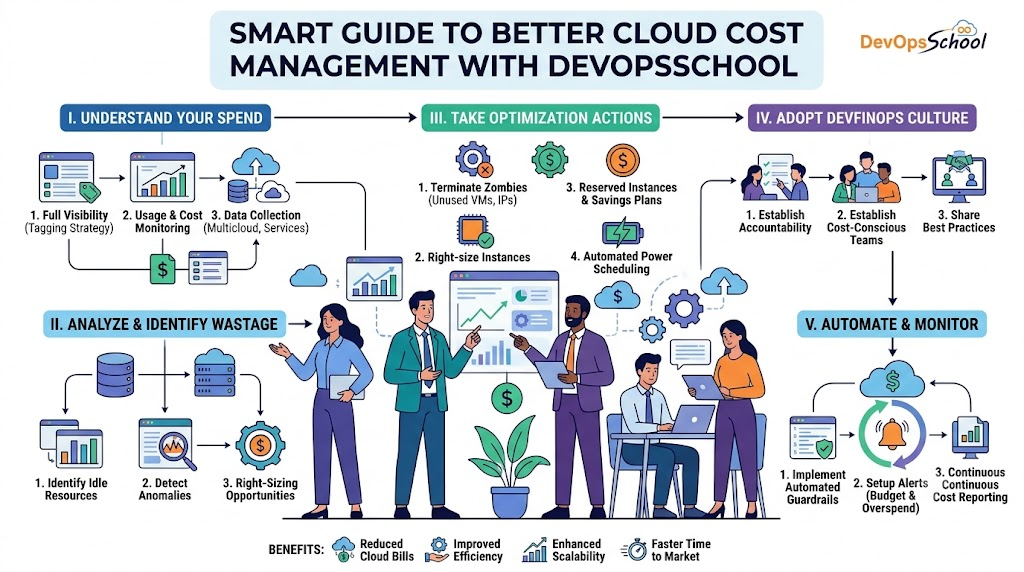
Setting up a strong cloud cost management plan takes time, care, and steady teamwork. Follow these clear steps to build a solid system for your organization:
- Assess current spending: Look closely at your past bills to see where most of your money goes.
- Set clear goals: Decide how much you want to save and what metrics matter most to leadership.
- Involve all teams: Bring tech, finance, and product managers together to talk openly about budgets.
- Choose tracking tools: Pick simple dashboards that show daily costs clearly without confusion.
- Set up alerts: Get notified right away when spending goes above your normal limits.
- Review and adjust: Check your progress every month and make changes as your apps grow.
Benefits, Challenges, and Common Mistakes
Managing cloud costs brings many great rewards to any tech-driven company. Organizations save money, reduce waste, and build healthy spending habits across departments. Engineers learn how to write cleaner, more efficient code that uses fewer resources. Leaders get clear reports to share confidently with stakeholders.
However, the path is not always smooth or easy to walk. A very common mistake is cutting costs too fast without checking app performance first. This rush can cause apps to crash or run very slowly for end users.
Another mistake is leaving cost tracking to just one person instead of the whole group. Cost control works best when everyone pitches in. Avoid these traps by taking small, steady steps.
Best Practices and Recommendations
Good daily habits make cloud cost management much easier over time. Start by tagging all cloud resources so you always know who owns them. If a server has no tag, find out why it is running in your environment.
Clean up old data files and disk snapshots that no one uses anymore. Use automated rules to shut down test servers at night and on weekends when nobody is working. Make cost reviews a normal and welcome part of your regular team meetings.
Share success stories when teams find clever ways to save money without hurting work. When internal skills are low, bring in experts or look into Kubernetes Training Netherlands if you use container systems.
| Approach | Main Focus | Best Used For |
| Manual Review | Checking bills by hand | Small teams with low cloud use |
| Automated Alerts | Real-time budget warnings | Growing teams needing fast updates |
| Full FinOps Plan | Cross-team cost control | Large companies with complex setups |
This table shows three common ways to handle cloud costs in modern organizations. Small teams often start with simple manual checks. As companies grow, automated alerts and full FinOps plans help keep large budgets under strict control.
How DevOpsSchool Can Help
Many companies want to manage their cloud costs well but lack the right skills in-house. DevOpsSchool offers expert help to guide your team through every technical challenge. When you need a deep look at your processes, DevOps Consulting Netherlands provides practical advice.
For teams looking to build new skills, DevOps Training Netherlands offers clear, hands-on learning paths. If your projects rely on modern container tools, Kubernetes Consulting Services can help you run them efficiently.
You can also Hire Freelance DevOps Engineers when you need extra hands for a big project. Each service is designed to support your goals with real, practical solutions.
Frequently Asked Questions About the Topic
What is FinOps Consulting Services? FinOps Consulting Services help businesses track and control their cloud spending by bringing tech and finance teams together.
Why do cloud bills grow so fast? Bills grow quickly when teams spin up servers and forget to turn them off after testing is done.
How can I start managing my cloud costs? Start by looking at past bills, setting up simple cost alerts, and tagging all active cloud resources.
Does cost management slow down software releases? No, good cost management helps teams work smarter without slowing down their daily development tasks.
What is the role of DevOps in cost control? DevOps practices automate infrastructure, making it easier to spin down unused resources and save money.
Are special tools required for cloud cost management? Basic cloud dashboards work well at first, but automated tools help as your infrastructure grows larger.
How does corporate training help with cloud budgets? Corporate training teaches engineers how to build efficient systems that use fewer cloud resources.
Can small businesses benefit from FinOps? Yes, small businesses can prevent waste early by building good spending habits from the very start.
What is the best way to handle unused cloud storage? Set up regular review dates to delete old data and snapshots that no one needs anymore.
How does DevOpsSchool support cloud cost management? DevOpsSchool provides expert training and consulting to help teams optimize their cloud setups safely.
Final Thoughts
Managing cloud costs is an ongoing journey that takes teamwork and steady focus. By tracking your spending, removing waste, and involving the whole team, you can keep your budget healthy. Smart cloud habits free up money for new ideas and better products. Organizations looking for expert guidance can rely on DevOpsSchool for practical support. Take small steps today to build a more efficient and cost-friendly cloud future for your business.